
Building Your Family Wealth Firewall™
How Successful Families Can Protect, Govern and Preserve Wealth Across Generations
A South African Family Wealth Case Study

At 52, a successful South African entrepreneur had already achieved what many business owners spend a lifetime trying to accomplish.
He had built profitable businesses, created jobs and accumulated substantial personal wealth, including cash, offshore investments and interests in private companies.
Yet the issue increasingly occupying his thoughts had nothing to do with markets, taxes or business performance.
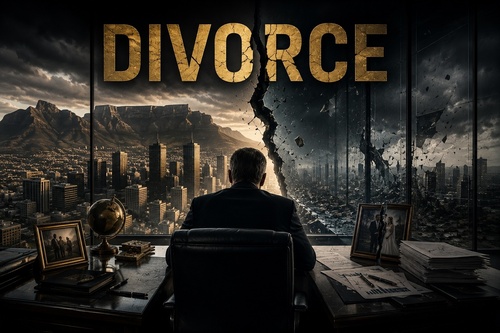
He was worried about a divorce that might never happen, involving one of his children.
He wanted his three children to benefit from everything he had built.
But he had begun asking a question that many successful parents never seriously consider:
"If one of my children gets divorced one day, what happens to the wealth I leave them?"
The Problem Was Bigger Than Divorce
Once he began thinking beyond the initial inheritance, other possibilities quickly appeared.
What if a child remarried?
What if creditors became involved?
What if a beneficiary experienced financial difficulties, moved to another country or died unexpectedly?
What happens when the wealth eventually passes to grandchildren?
And there was another uncomfortable question.
What happens if the wealth creator himself experiences divorce or another major personal event before succession even begins?
The answers depend upon matrimonial arrangements, ownership structures, countries of residence and applicable law.
But the entrepreneur had begun to realise something important.
This was not really a divorce-planning problem.
It was a family wealth governance problem.
What Was Missing Was a Firewall
His businesses had been carefully structured.
His accumulated personal wealth had evolved much more organically. Some investments were owned personally. Others were held through companies in which he owned the shares.
That worked while he remained alive and making the decisions.
The weakness became clearer when looking twenty, thirty or even fifty years into the future.
If substantial wealth simply passed outright from one generation to another, the personal circumstances of each new owner could begin to matter.
Marriage. Divorce. Creditors. Remarriage. Death. Different countries. Different tax systems. Another generation of succession.
The family had created the wealth.
What they had never created was a firewall around it.
The objective was not to hide assets, defeat legitimate claims or avoid legal, regulatory or tax obligations.
Nor was it about moving assets after a dispute had already begun.
The question was much more fundamental:
"How can my children benefit from the wealth without necessarily receiving all of the underlying assets outright?"
That distinction changed the entire planning exercise.
The family was no longer thinking simply about who should inherit.
They were thinking about how family wealth should be owned, governed and preserved across generations.

Only Then Did Mauritius Enter the Conversation
Mauritius was not the starting point.
The family's objectives were.
A number of international structuring possibilities were considered.
For this particular family, Mauritius ultimately offered several practical advantages, including an established legal framework for private wealth structuring, political and regulatory stability, geographical proximity to South Africa and convenient access.
Importantly, the objective was not to relocate the client's existing South African operating businesses.
It was much narrower:
To establish a long-term governance and succession framework for selected accumulated family wealth.
For this family's particular circumstances, a Mauritius Foundation was ultimately selected.

What Actually Changed?
Selected family wealth could now be held within a separate legal and governance framework rather than simply having to pass outright from one individual owner to another.
The Foundation's governing framework could establish how assets were administered, who might benefit, how distributions could be made and how capital intended for future generations could be treated.
The family's wealth did not disappear.
The Foundation did not eliminate applicable legal, regulatory or tax obligations.
And it did not make the family's wealth "divorce-proof."
What changed was ownership, governance and continuity.
Beneficiaries could potentially receive distributions, support and access to capital in accordance with the governing framework without every underlying asset necessarily becoming their outright personal property.
That was the firewall.
Not an impenetrable barrier around the family's wealth, but a different architecture through which that wealth could be owned, governed and transitioned between generations.

Perhaps the Most Important Decision Was When He Did It
The planning happened early.
The Foundation was established as part of proactive long-term wealth planning while the entrepreneur was financially healthy and solvent.
There was no existing dispute.
No known creditor claim.
No marriage breakdown that the structure was being created to defeat.
No crisis.
That distinction matters.
Responsible long-term planning before a problem arises is fundamentally different from attempting to rearrange ownership after one has already begun.
He didn't wait for the storm and then try to build the shelter.
He planned while the skies were still clear.
The Question That Ultimately Mattered
The entrepreneur began the conversation worried about divorce.
But divorce turned out to be only one example of a much larger problem.
Nobody could predict what would happen to his family over the next fifty years.
Children would marry. Some marriages might fail. Businesses could succeed or fail. Family members might move countries. Tax laws could change. Creditors could appear. People would die. Grandchildren would eventually become adults.
What the family could decide was how its wealth would be owned and governed through those changes.
And that ultimately led to a much bigger question:
"How do we make sure what we've built is still here for our grandchildren?"
Traditional estate planning quite reasonably asks:
"Who gets my assets when I die?"
For families that have accumulated substantial wealth, another question may be just as important:
"What happens to everything after they get it?"
There is no single structure appropriate for every family. The correct approach depends upon family circumstances, matrimonial arrangements, countries of residence, assets, tax considerations, succession objectives and applicable law. Appropriate professional advice in the relevant jurisdictions is essential.
But the principle illustrated by this case is simple.
You spend a lifetime creating the wealth.
The firewall is designed to help it survive what happens next.
Please Watch The Short Message From Scott Below
Could Your Family Wealth Have Similar Exposures?
You do not need to be expecting a divorce or facing a dispute for these questions to matter.
If you own a successful business, hold substantial investments personally, have children who may eventually inherit significant wealth, own assets in more than one country, or simply aren't completely certain what happens to everything after it leaves your hands, there may be questions worth examining now.
You may not need a Foundation.
You may not need an offshore structure at all.
But before deciding whether anything needs to change, it makes sense to identify where potential exposures may exist.
The Five Stages of Building Your Family Wealth Firewall™
- Firewall Exposure Audit™: Identify what may be exposed.
Understand your existing assets, ownership structures, family circumstances, jurisdictions and potential vulnerabilities before considering solutions. - Firewall Stress Test™: Ask, "What happens if...?"
Examine how existing arrangements might behave under divorce, death, creditor problems, relocation, tax-residency changes or future inheritance. - Firewall Blueprint™: Determine what, if anything, should change.
Where specialist planning is appropriate, relevant professionals develop recommendations suited to the family and jurisdictions involved. - Firewall Implementation™: Put the agreed strategy in place.
The appropriate professionals establish any legal, corporate, succession or other arrangements that are agreed upon. - Annual Firewall Review™: Because circumstances change.
Families, businesses, assets, countries and tax laws change. The Firewall should evolve with them.

You Don't Need to Know the Solution Before You Start
You do not need to know whether the answer involves a trust, Foundation, matrimonial planning, succession arrangements, corporate restructuring or no structural change at all.
And you do not need to know which professional you should speak to first.
That is part of what the Firewall process is designed to establish.
MauritiusWealth.mu maintains relationships with experienced legal, tax, corporate, banking, immigration and international structuring professionals in Mauritius, South Africa and other jurisdictions.
Your first step is not choosing a structure.
It is identifying what you are trying to protect and where the potential exposures may be.
START MY FIREWALL EXPOSURE AUDIT™
Begin by identifying the potential exposures. No structure or solution is presumed in advance.
Scott Oliver is a retired British writer and independent researcher living in Mauritius. A former Royal Marines Commando and former Wall Street investment professional, he has spent more than four decades living and working internationally across 14 countries. During that time, he worked extensively in international wealth management, cross-border asset protection, international business structuring and global residency planning.
Today, Scott's focus is no longer on managing money or providing professional advice. Instead, through MauritiusWealth.mu, he writes independent educational articles designed to help successful African business owners ask better questions, make better decisions and, when appropriate, identify the right expertise to help protect everything they have spent a lifetime building.
His articles are published solely for general educational and informational purposes and should not be regarded as legal, financial, tax, immigration, investment or other professional advice. Every business owner's circumstances are unique, and readers requiring professional assistance should always consult an appropriately qualified and licensed professional.