
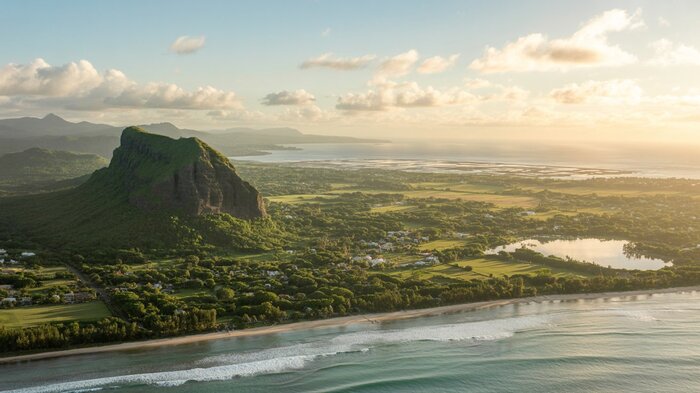
Where Does Mauritius Put Its Trash, and What Happens When It Runs Out of Space?
Mauritius is a small island with a modern economy, a growing population, and rising consumption. Like every island nation, it faces a basic physical constraint: there is only so much land.
Every bottle, food wrapper, broken appliance, and construction offcut must go somewhere. For nearly three decades, most of it has gone to one place, the Mare Chicose sanitary landfill in the south of the island. Today, that site still functions, but it is approaching the limits of what engineering can extend.
Waste management rarely attracts headlines, yet it shapes public health, land use, tourism, and long term planning. Mauritius is not facing a garbage crisis today. Collection works, streets are generally clean, and disposal systems operate daily. But the country is approaching an infrastructure turning point. The next phase will determine how waste is handled for the next generation.
How the current system works
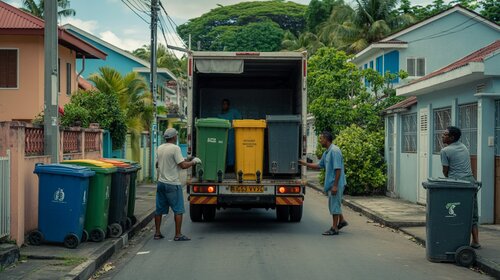
Household and commercial waste in Mauritius is collected by municipal and district councils several times per week. Most waste is not separated at source, although recycling programs exist for plastic bottles, glass, paper, and metal. After collection, trucks carry the majority of non recycled waste to the Mare Chicose landfill, the island's main disposal site since 1997.
Medical and hazardous waste follow separate, tightly controlled channels and are typically incinerated before final disposal. The system is centralized and functional, but heavily dependent on one landfill.
Mauritius generates roughly 1,200 to 1,500 tonnes of waste per day. Tourism, construction, and rising living standards all contribute to that volume. For years, Mare Chicose has absorbed most of it. Engineers compact and bury waste in lined cells, treat runoff water, and manage gases produced by decomposition. These measures keep the site operating safely, yet they do not create new land. They only buy time.
The timeline problem
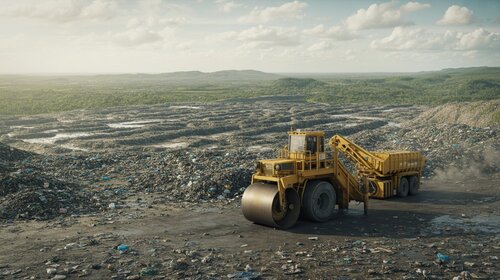
Mare Chicose has already exceeded its original design life. Instead of closing, it has been expanded vertically, meaning waste is stacked higher in engineered layers. Government planning documents and environmental reports suggest that, with continued expansion, the landfill may have roughly eight to fifteen years of usable life remaining.
The exact timeline depends on waste growth, recycling success, and whether new infrastructure is built. Waste volumes are expected to rise as the population grows and consumption increases. Without change, the remaining capacity shrinks faster.
This does not mean the landfill will suddenly stop functioning. It means that planning must happen now. Engineers can extend the life of a landfill only so far. At some point, another solution becomes necessary.
Why a new landfill alone is not enough
One obvious option would be to build a new landfill. On a small island, that is easier said than done. Suitable land is scarce, communities resist hosting waste sites near homes and farms, and environmental standards are higher than in the past.
Tourism also plays a role. Mauritius markets itself as a clean, green destination, so large new dumping areas carry reputational costs. Even if a new landfill is built, it would only delay the same problem.
Officials and planners increasingly view landfill expansion as a temporary measure. The long term answer must reduce the amount of waste going into the ground.
A four pillar strategy
Mauritius is gradually shifting toward a diversified waste system built on four pillars.
- The first is reducing waste at the source. Policies to limit single use plastics, encourage reusable packaging, and hold producers responsible for packaging disposal are expanding. Less waste entering the system means less pressure on landfills.
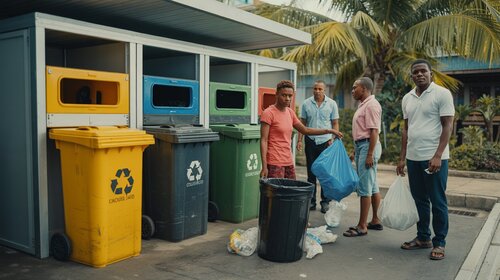
- The second pillar is recycling and material recovery. Private recycling companies operate on the island, and public awareness campaigns encourage separation of plastics, glass, and paper. Recycling rates remain modest compared with Europe, but they are rising.
- The third pillar involves organic waste. Food scraps and garden waste make up a large share of what goes into landfill. Composting programs in municipalities, hotels, and agricultural sectors aim to divert that material. When organic waste is composted instead of buried, landfill volumes drop significantly and methane emissions decline.
- The fourth pillar is waste to energy. Mauritius has explored building facilities that burn waste at high temperatures to generate electricity. This process reduces the volume of waste dramatically and provides energy, but it also raises environmental and public concerns. Many island nations eventually adopt some form of waste to energy because landfills alone cannot handle long term demand.
Can plastic bottles become roads?
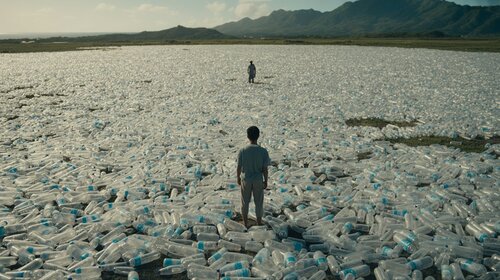
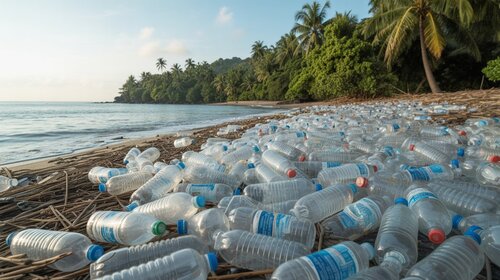
After living in more than a dozen countries over the last 66 years, one of the small daily details that stands out in Mauritius is the sheer number of bottled water containers in circulation. In homes, offices, taxis, and shops, plastic bottles are everywhere.
That reality has led some countries to experiment with mixing shredded plastic into asphalt to build more durable roads. India, the United Kingdom, and South Africa have tested plastic-modified road surfaces that resist heat and water damage better than conventional asphalt. For Mauritius, where bottled water consumption is high and landfill space is limited, the idea is appealing.
Reusing certain plastics in road construction could divert part of the waste stream and extend road life at the same time. The impact would be modest, because roads are rebuilt gradually and only specific plastics are suitable for asphalt mixtures. Even so, small pilot projects could offer a practical way to reuse some material while broader recycling and waste-reduction programs continue to expand.
What this means for residents
For people living in Mauritius today, waste collection remains reliable and daily life is not affected by landfill limits. There is no immediate risk to public health or property values. However, long term planning is underway. The country must transition from reliance on one landfill to a broader system that includes recycling, composting, and possibly energy recovery. This shift will take years, not months.
Learning from other islands
Mauritius is not alone. Singapore relies heavily on waste to energy plants and a carefully managed offshore landfill. Malta and Cyprus combine recycling with incineration. Iceland and other island states pursue circular economy policies that reduce waste generation. The lesson is consistent. Small islands cannot rely on landfills forever. They must combine several approaches.
The next twenty years
Most realistic forecasts suggest a gradual transition. Mare Chicose will continue operating with engineering extensions. Recycling and composting programs will expand. Waste to energy projects will likely move forward in some form. At some point, a new landfill or additional disposal capacity will still be required, but it will serve a smaller share of total waste if diversion efforts succeed.
Bottom line
Mauritius is not running out of landfill space tomorrow, but it cannot rely on Mare Chicose indefinitely. The island is moving toward a diversified waste system that reduces landfill dependence and spreads risk across recycling, composting, and energy recovery.
The challenge is real, yet manageable. With steady planning and public cooperation, Mauritius can transition from a landfill dependent model to a more resilient infrastructure over the next decade. For residents and investors alike, the key message is simple. The system works today, and the next phase is already being built.
Scott Oliver is a retired British writer and independent researcher living in Mauritius. A former Royal Marines Commando and former Wall Street investment professional, he has spent more than four decades living and working internationally across 14 countries. During that time, he worked extensively in international wealth management, cross-border asset protection, international business structuring and global residency planning.
Today, Scott's focus is no longer on managing money or providing professional advice. Instead, through MauritiusWealth.mu, he writes independent educational articles designed to help successful African business owners ask better questions, make better decisions and, when appropriate, identify the right expertise to help protect everything they have spent a lifetime building.
His articles are published solely for general educational and informational purposes and should not be regarded as legal, financial, tax, immigration, investment or other professional advice. Every business owner's circumstances are unique, and readers requiring professional assistance should always consult an appropriately qualified and licensed professional.
Trusted Expert Resources
- Waste Management Strategy for Mauritius
Overview of national waste policy, recycling goals, and landfill planning.
Read at the Ministry of Environment - Developing a Waste to Resource Strategy
UNDP analysis of Mauritius' transition toward recycling and circular economy systems.
Read the UNDP report - Solid Waste and Landfill Planning on Small Islands
International perspective on landfill limits and waste solutions in island nations.
Read at the World Bank - Integrated Waste Management and Circular Economy
Research on recycling, composting, and waste reduction strategies for developing economies.
Read at UNEP