

Mauritius: A Real-World Case Study In Peaceful Multicultural Living
On this small island in the Indian Ocean, cultures that often clash elsewhere have coexisted for generations with a surprising degree of calm. Not perfectly. But consistently enough to be worth examining.
This is not a story about utopia. It is a practical look at how one society learned to make multicultural living function in everyday life.
A Quiet Example In A Noisy World
Most countries talk about diversity. Mauritius lives with it every day.
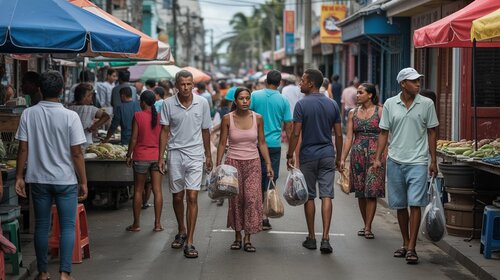
On a small island in the Indian Ocean, people of Indian, African, Chinese, and European ancestry share the same streets, schools, businesses, and political system.
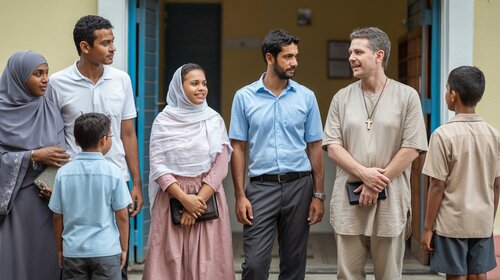
Hindu temples, churches, mosques, and pagodas stand within short distance of one another. Major religious festivals from different traditions are observed nationally. In daily life, coexistence is not presented as a grand experiment. It is simply normal.
Mauritius is not a utopia. It has economic disparities, political tensions, and social debates like any other society.
Yet when viewed in comparative terms, it stands out as one of the more stable multicultural environments in the modern world. That makes it worth examining not as a paradise, but as a functioning case study.
The central question is straightforward. Why has Mauritius managed long-term cultural coexistence with relatively little conflict, while many larger societies continue to struggle?
An Island Shaped By Migration And Necessity
Mauritius did not become multicultural in recent decades. Its diversity emerged over nearly two centuries.
Under French and British colonial rule, people were brought to the island from India, Africa, China, and Europe. Over time, these communities formed distinct cultural identities but developed a shared economic and political reality.
No single group could dominate completely. Cooperation was not an abstract value. It was a practical requirement for stability and prosperity. Over generations, that necessity evolved into habit.
Unlike countries experiencing rapid demographic change today, Mauritius had time. Cultural coexistence matured gradually. Communities learned to live side by side not through policy campaigns but through daily interaction in markets, schools, and workplaces.
The result is a society where diversity feels historically rooted rather than recently imposed.
The Mechanics Of Everyday Coexistence
The most striking aspect of Mauritius is not its diversity but how routine it feels.
Public holidays reflect multiple religions. A Mauritian calendar includes Diwali, Eid, Christmas, Chinese Spring Festival, and others.
In many workplaces, colleagues from different backgrounds celebrate each other's festivals. Business partnerships often cross cultural lines. Schools bring children together from a young age. Multilingual communication is standard.
English functions as the language of administration and business. French is widely used in media and daily life. Mauritian Creole acts as a common social bridge across communities.
This linguistic flexibility reduces barriers and fosters interaction.
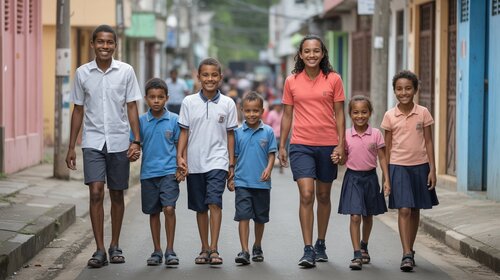
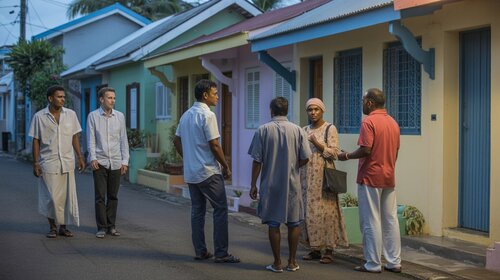
In many countries, diversity exists in parallel communities. In Mauritius, interaction is constant. People share offices, government institutions, and commercial networks.
Over time, familiarity reduces suspicion. The ordinary rhythm of life does much of the work that policy alone cannot achieve.

Why The System Holds Together
Several structural factors reinforce this stability.
Scale And Proximity
With a population of around 1.3 million, Mauritius operates on a human scale. Social networks overlap. Reputation matters. People encounter one another repeatedly in professional and social contexts. That proximity encourages moderation and cooperation.
Economic Interdependence
The economy depends on collaboration across communities. Finance, tourism, manufacturing, and services involve diverse ownership and management. When prosperity depends on stability, most groups have strong incentives to maintain it.
Political Continuity
Mauritius has maintained democratic institutions and regular elections for decades. While politics often reflects communal identities, there is broad consensus around maintaining order and avoiding serious conflict. Stability is seen as a shared national interest.
Shared National Identity
Many Mauritians identify strongly with the country itself rather than exclusively with ancestral origins. Cultural traditions remain distinct, but a practical sense of Mauritian identity overlays them. This balance allows difference without fragmentation.
Cultural Pragmatism
Perhaps most important is an underlying pragmatism. The Mauritian approach to coexistence is not heavily ideological. It is practical. People tend to focus on work, family, and economic progress. Social peace is viewed as beneficial for everyone.
Where Mauritius Is Not Perfect
A credible analysis must acknowledge limitations.
Economic inequality exists, as it does in most countries. Some communities have historically had greater access to wealth and opportunity.
Political parties sometimes draw support along cultural lines. Young professionals occasionally leave the island in search of larger markets. Social debates about representation and opportunity continue.
Mauritius also benefits from scale. Managing diversity in a small island state is different from doing so in countries of tens or hundreds of millions. Its model cannot simply be copied elsewhere.
Yet imperfection does not diminish its achievement. The relevant comparison is not with an ideal society but with the real challenges faced by many multicultural nations today.
A Contrast With Larger Societies
In Europe, North America, and parts of Africa, demographic change has accelerated in recent decades. Large populations, rapid migration, and economic pressures create complex integration challenges. Political polarization often follows.
Mauritius developed under different conditions. Diversity evolved gradually. Economic interdependence formed early. A shared interest in stability became embedded across communities.
The result is not the absence of tension but the presence of durable mechanisms for managing it.
The lesson is not that Mauritius is morally superior. It is that long-term coexistence requires time, incentives, and daily interaction.
Practical Lessons From The Mauritian Experience
Several observations emerge from this case study.
Coexistence tends to be strongest where communities rely on one another economically.
Shared languages and communication bridges reduce fragmentation. Political stability reinforces social trust. Gradual adaptation is easier than rapid demographic change. Everyday interaction matters more than formal rhetoric.
These are not theoretical insights. They are observable patterns within Mauritian society.
Why This Matters To Internationally Mobile People
For those considering where to live, invest, or establish residency, social stability is not an abstract concept. It shapes quality of life, safety, and long-term planning.
A society accustomed to managing cultural diversity calmly can offer predictability that is increasingly valued.
Mauritius combines that social stability with rule of law, functioning institutions, and a business-friendly environment.
For globally mobile individuals, it represents not just a tropical location but a relatively steady social ecosystem.
In a world where cultural tensions dominate headlines, that steadiness carries practical value.
A Measured Conclusion
Mauritius does not claim to have solved the challenges of multiculturalism. It has simply lived with them long enough to develop workable habits.
Over generations, necessity produced cooperation, and cooperation became normal.
It is not a model that can be replicated everywhere. Conditions differ. Histories differ. But it does demonstrate that diverse cultures can coexist peacefully over long periods when economic incentives, political stability, and daily interaction align.
In that sense, Mauritius stands as a quiet but instructive example. Not perfect. Not idealized. Just a small island that has made multicultural living function in practice.
Scott Oliver is a retired British writer and independent researcher living in Mauritius. A former Royal Marines Commando and former Wall Street investment professional, he has spent more than four decades living and working internationally across 14 countries. During that time, he worked extensively in international wealth management, cross-border asset protection, international business structuring and global residency planning.
Today, Scott's focus is no longer on managing money or providing professional advice. Instead, through MauritiusWealth.mu, he writes independent educational articles designed to help successful African business owners ask better questions, make better decisions and, when appropriate, identify the right expertise to help protect everything they have spent a lifetime building.
His articles are published solely for general educational and informational purposes and should not be regarded as legal, financial, tax, immigration, investment or other professional advice. Every business owner's circumstances are unique, and readers requiring professional assistance should always consult an appropriately qualified and licensed professional.