
“Mauritius Was Made First, and Then Heaven”: What Mark Twain Really Said
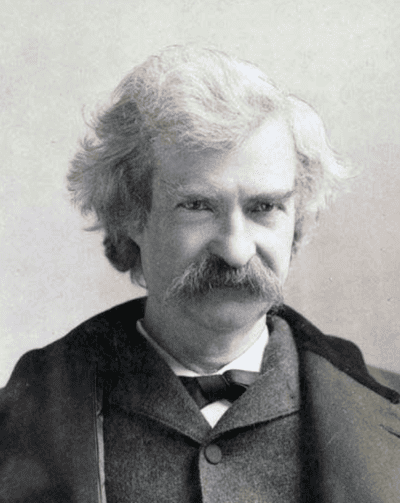
“You gather the idea that Mauritius was made first and then heaven; and that heaven was copied after Mauritius.”
Few travel quotations have become as famous, or as frequently misunderstood as this one associated with Mark Twain.
For more than a century, it has appeared in travel brochures, guidebooks and websites as though Twain himself declared that heaven had been modelled on Mauritius. The reality is rather more interesting.

Who Was Mark Twain?
Born Samuel Langhorne Clemens in 1835, Mark Twain was far more than a novelist. He was one of America's greatest humorists, a social critic and a remarkably perceptive observer of human nature. His best-known works, The Adventures of Tom Sawyer and Adventures of Huckleberry Finn, remain classics of American literature.
Twain was famous for his wit, his skepticism and his ability to expose exaggeration and human vanity with gentle but unmistakable humour.
During the closing years of the nineteenth century, he travelled extensively around the world, documenting his experiences in his travel memoir Following the Equator.

Why Did He Visit Mauritius?
In 1896, while undertaking an international lecture tour following financial difficulties, Twain travelled through India, Australia, New Zealand, South Africa and Mauritius.
The island was one of several stops during his voyage across the Indian Ocean, giving him the opportunity to observe its scenery, people and daily life—exactly the kind of material he loved to write about.
What Did Mark Twain Actually Say?
This is where the story becomes especially interesting.
Twain did not write that Mauritius was made first and then heaven. Instead, he explained that this was the impression visitors received from the enthusiastic people they met on the island.
In Chapter 62 of Following the Equator, he wrote:
"From one citizen you gather the idea that Mauritius was made first, and then heaven; and that heaven was copied after Mauritius. Another one tells you that this is an exaggeration; that the two chief villages, Port Louis and Curepipe, fall short of heavenly perfection; that nobody lives in Port Louis except upon compulsion, and that Curepipe is the wettest and rainiest place in the world."
Like much of Twain's writing, the passage combines admiration with gentle satire. He first presents the enormous local pride people felt for their island, then immediately balances it with a humorous observation about the uncomfortable heat of Port Louis and the famously rainy climate of Curepipe.

Did Mark Twain Like Mauritius?
Absolutely.
Although he was careful not to overstate his praise, Twain clearly admired Mauritius. Throughout Following the Equator, he wrote appreciatively about its dramatic mountain scenery, lush sugar-cane plantations and striking natural beauty.
His humour was never intended to dismiss the island. Instead, it reflected his lifelong habit of contrasting enthusiasm with reality and allowing readers to appreciate both at the same time.
In many ways, that balanced style makes his observations even more credible today.

Why Does This Matter Today?
Accurately quoting historical figures matters.
The famous "heaven" quotation has helped introduce millions of people to Mauritius, but understanding its full context gives us a richer appreciation of both the island and the author.
Rather than making a simple promotional statement, Twain captured something more authentic: the immense affection Mauritians had for their homeland, while gently acknowledging that, like every place on earth, it was not entirely without imperfections.
That combination of admiration, honesty and humour is precisely what has allowed his writing to endure for well over a century.

What's The Bottom Line Scott?
Mark Twain's famous "heaven" quotation deserves to be remembered, but it also deserves to be quoted accurately.
He was not claiming as an objective fact that heaven had been copied after Mauritius. Rather, he was describing the infectious pride of the Mauritians he met, before characteristically adding a humorous observation about Port Louis and rainy Curepipe.
Perhaps that makes the passage even better.
Instead of reading like advertising copy, it reads exactly as Twain intended: a witty, affectionate and remarkably human portrait of an island that clearly left a lasting impression on one of history's greatest travel writers.
If you require legal, tax, accounting, corporate, banking, property, immigration or wealth planning advice relating to Mauritius or South Africa, you're welcome to contact the author Scott Oliver privately. Scott has built relationships with a carefully selected network of experienced independent professionals in both Mauritius and many African countries, including respected lawyers, accountants, tax specialists, bankers, fiduciary providers, immigration consultants and property professionals with established reputations and proven track records. Where appropriate, he may be pleased to introduce you to an independent professional whose experience best matches your particular circumstances and objectives. Any engagement, advice or professional relationship is entirely between you and the independent professional you choose to appoint.
Scott Oliver is a retired British writer and independent researcher living in Mauritius. A former Royal Marines Commando and former Wall Street investment professional, he has spent more than four decades living and working internationally across 14 countries. During that time, he worked extensively in international wealth management, cross-border asset protection, international business structuring and global residency planning.
Today, Scott's focus is no longer on managing money or providing professional advice. Instead, through MauritiusWealth.mu, he writes independent educational articles designed to help successful African business owners ask better questions, make better decisions and, when appropriate, identify the right expertise to help protect everything they have spent a lifetime building.
His articles are published solely for general educational and informational purposes and should not be regarded as legal, financial, tax, immigration, investment or other professional advice. Every business owner's circumstances are unique, and readers requiring professional assistance should always consult an appropriately qualified and licensed professional.