
The Pan-African Expansion Trap: Why Global Capital Structures Through Mauritius
The heavy oak doors of the dining room close, leaving behind the clink of dessert silver for the quiet, leather-lined warmth of the library.
Outside, the night air over Grand Baie is still; inside, the conversation has reached that candid, post-dinner threshold where sanitized corporate press releases are replaced by raw balance-sheet realities.
Around the low mahogany table sit six individuals who collectively direct billions in capital, navigate central bank policy, and engineer cross-border corporate architecture: a billionaire industrialist who built an African conglomerate from scratch; a sovereign wealth fund manager who deploys capital across emerging markets; a former finance minister who knows precisely how fiscal budgets are squeezed; a veteran central banker; a seasoned Silicon Valley venture capitalist; and an international private equity partner.
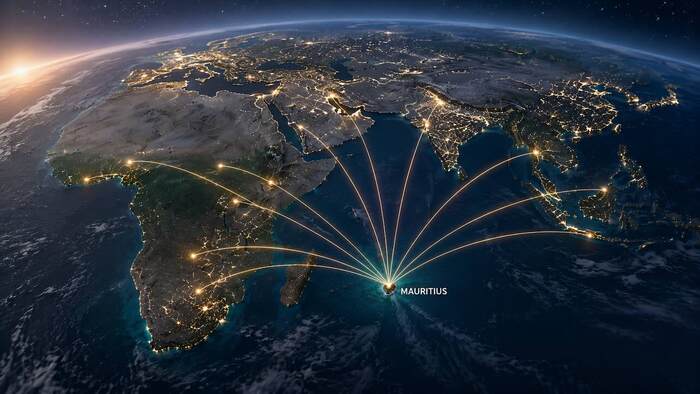
You sit down quietly as the host pours a final round. The topic on the table isn't theoretical, it is the systemic friction draining the lifeblood out of cross-border enterprise across Africa, and why a specific island in the Indian Ocean has become the silent operational axis for global capital.

The Pan-African Expansion Trap
“The public narrative is always about 'Africa Rising' and the demographic dividend,” begins the billionaire entrepreneur, leaning back and swirling his glass. “And the market opportunity is genuine. But what no one tells you at the investment summits is that expanding across African borders without a treaty-backed structure is like trying to run a marathon in deep water.”
He pauses, looking across at the seasoned international investor. “You build a brilliant operational company in Lagos, Nairobi, or Johannesburg. You hit $50 million in revenue. Then you try to move capital across a border, to pay a supplier, service foreign debt, or return capital to your shareholders. That's when the trap closes.”
The former finance minister nods slowly in agreement. “When governments face fiscal deficits, tax authorities don't innovate—they squeeze the most accessible targets. Non-treaty cross-border management fees, royalties, and dividends are routinely hit with withholding taxes ranging from 15% to 30%. That isn't a minor administrative haircut; it's a systemic drain that destroys cash flow before a company can ever achieve scale.”
“And it's not just tax leakage, it's operational paralysis,” adds the venture capitalist. “We've backed brilliant African founders who raised money at a $100 million valuation. But when we look at bringing in international LPs for Series B, the foreign institutional investors refuse to hold equity directly in volatile, high-friction jurisdictions. The country risk discount wipes 20% to 30% off the valuation overnight.”
The room falls quiet for a moment as the central banker sets down his cup. “Let's talk about the elephant in the room: FX rationing and capital controls. If you are earning local currency in markets facing acute hard-currency shortages, your profits are trapped. Currency devaluation eats your treasury alive while you wait months for central bank allocation just to pay an international vendor.”
“This is precisely why we don't deploy primary capital directly into operating entities without an international intermediate structure,” states the sovereign wealth fund manager. “Capital requires three fundamental assurances before it moves: predictable tax treatment, absolute liquidity rights, and an unshakeable legal framework. Without those three, capital stays on the sidelines.”

The Top 10 Cross-Border Friction Points, And the Strategic Solutions
The host gestures toward the whiteboard behind the leather armchairs. “If we had to rank the friction points killing cross-border expansion in order of operational urgency, and map how a properly structured hub like Mauritius solves them, where do we start?”
The six room members begin breaking down the ten core friction points facing the modern multinational enterprise:
1. Trapped Liquidity & Strict Foreign Exchange Controls
- The Vulnerability: Import-dependent operators, pan-African holding entities, and companies with foreign USD/EUR debt servicing local-currency revenue.
- Problematic Jurisdictions: Nigeria, Zimbabwe, Ethiopia, Malawi, Angola.
- The Strategic Solution: Mauritius operates with zero foreign exchange controls. Holding group treasury assets in Mauritius allows companies to accumulate operating reserves in hard currencies (USD, EUR, GBP), insulate capital against forced local conversions, and execute international settlements without delay.
- Quantifiable Impact: 10% to 30%+ of total corporate value preserved annually by eliminating forced currency conversions and hyperinflationary decay.
2. Excessive Withholding Tax (WHT) Leakage on Inter-Group Cash Flows
- The Vulnerability: Shared service centers (IT, legal, management), regional tech platforms, and franchisors charging group royalties or service fees across borders.
- Problematic Jurisdictions: Nigeria, Ghana, Kenya, Tanzania, DRC.
- The Strategic Solution: Mauritius maintains an extensive network of Double Taxation Agreements (DTAs) across Africa. These treaties legally cap or reduce source-country WHT rates from non-treaty spikes of 15%–30% down to 5%–10% (and 0% on outbound dividends leaving Mauritius).
- Quantifiable Impact: Direct recovery of $500,000 to $1,000,000 in bottom-line liquidity on every $5 million in inter-company cash flows.
3. Banking & Multi-Currency Settlement Friction
- The Vulnerability: Cross-border traders, fintechs, pan-African logistics networks, and businesses executing multi-currency international vendor payments.
- Problematic Jurisdictions: Zimbabwe, Sudan, Somalia, DRC, Mozambique.
- The Strategic Solution: As an established International Financial Centre, Mauritius provides access to tier-one international banking rails, multi-currency accounts, and seamless SWIFT settlement options, bypassing high-risk correspondent de-risking.
- Quantifiable Impact: 1% to 3% savings on FX conversion spreads and transaction fees, alongside the elimination of revenue-crippling payment delays.
4. Punitive Capital Gains Tax (CGT) on Asset Disposals & Exits
- The Vulnerability: High-growth startups, private equity portfolio firms, real estate developers, and founders preparing for partial or total equity sales to foreign investors.
- Problematic Jurisdictions: South Africa, Uganda, Kenya, Nigeria, Cote d'Ivoire.
- The Strategic Solution: Under primary Mauritius DTAs, taxing rights on capital gains realized from share transfers are allocated solely to the residence state of the holding entity (Mauritius). Because Mauritius levies 0% Capital Gains Tax, corporate restructures and portfolio exits occur without local tax drag.
- Quantifiable Impact: Preservation of 10% to 30% of gross transaction value during an asset sale or institutional exit.
5. Cumulative Double Taxation & Foreign Tax Credit Inefficiencies
- The Vulnerability: Cross-border engineering firms, contractors, and pan-African operators paying corporate tax at source while facing bureaucratic delays in claiming home-country tax credits.
- Problematic Jurisdictions: Angola, DRC, Tanzania, Mozambique, Zimbabwe.
- The Strategic Solution: DTAs legally bind signatory states to eliminate double taxation. Complemented by Mauritius's Partial Exemption Regime (80% exempt, yielding an effective corporate tax rate of 3%) and foreign tax credit mechanisms, cumulative corporate tax burdens are strictly contained.
- Quantifiable Impact: Effective corporate tax rates capped at 3% to 15% (compared to non-treaty cumulative taxation exceeding 30%–40%).

6. Exposure to Arbitrary "Permanent Establishment" (PE) Claims
- The Vulnerability: Mining support services, cross-border software implementations, telecom installers, and consulting firms deploying remote technical staff on short-term foreign client projects.
- Problematic Jurisdictions: Tanzania, Kenya, Nigeria, Uganda, Zambia.
- The Strategic Solution: DTAs establish bright-line legal thresholds (e.g., clear 183-day or 6-to-12-month activity windows) before local revenue agencies can claim a "Permanent Establishment" exists, protecting the parent entity's global revenue from arbitrary local taxation.
- Quantifiable Impact: Full protection against retroactive 20% to 30% corporate income tax assessments on parent company revenues.
7. Unilateral & Onerous Transfer Pricing Adjustments
- The Vulnerability: Manufacturing groups, FMCG distributors, agricultural exporters, and mining corporations moving physical inventory, management services, or inter-company loans across borders.
- Problematic Jurisdictions: South Africa, Kenya, Nigeria, Egypt, Uganda.
- The Strategic Solution: Mauritius DTAs incorporate formal Mutual Agreement Procedures (MAP). This requires tax authorities in both jurisdictions to enter bilateral negotiation to resolve transfer pricing disputes, preventing double taxation on the same transaction.
- Quantifiable Impact: Elimination of 10%–20% retroactive tax penalties and years of costly court litigation.
8. Valuation Discounts & Capital-Raising Friction
- The Vulnerability: Venture-backed tech startups, infrastructure projects, and renewable energy developers seeking institutional venture capital or private credit.
- Problematic Jurisdictions: Nigeria, Egypt, Zimbabwe, DRC, Ethiopia.
- The Strategic Solution: Global funds prefer pooling capital into a Mauritius Special Purpose Vehicle (SPV) operating under familiar English common law principles. Structuring through Mauritius insulates foreign investors from local political instability and legal uncertainty.
- Quantifiable Impact: 15% to 25% reduction in the Cost of Capital and the complete elimination of political-risk valuation discounts.
9. Legal Uncertainty & Expropriation Threats
- The Vulnerability: Capital-intensive resource extraction, energy producers, large-scale agriculture, and infrastructure operators with fixed, non-movable physical assets.
- Problematic Jurisdictions: DRC, Guinea, Sudan, Zimbabwe, Mali.
- The Strategic Solution: Beyond DTAs, Mauritius maintains a network of Investment Promotion and Protection Agreements (IPPAs) across Africa. These treaties guarantee non-discrimination, protect against uncompensated state expropriation, and provide direct recourse to international arbitration (such as ICSID), with final legal appeals routed to the Judicial Committee of the Privy Council in London.
- Quantifiable Impact: 100% legal asset protection under international law against arbitrary state intervention.
10. Fragmented Wealth Transfer & Estate Tax Leakage
- The Vulnerability: Multi-generational family businesses, conglomerates owned by high-net-worth founders, and mid-sized industrial groups undergoing generational succession.
- Problematic Jurisdictions: South Africa, Nigeria, Kenya, Egypt, Ghana.
- The Strategic Solution: Holding enterprise wealth within Mauritius Trusts or Foundations avoids complex multi-jurisdictional probate delays and forced-heirship conflicts, operating in an environment with 0% estate duty, 0% inheritance tax, and 0% wealth tax.
- Quantifiable Impact: 15% to 40% direct savings in estate duties and multi-generational probate costs.
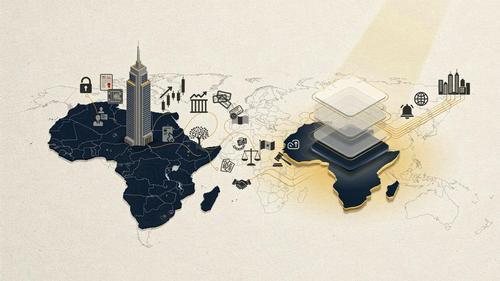
Universal Applicability: Beyond the African Continent
“It's critical to realize this isn't merely an African playbook,” notes the sovereign wealth fund manager, gesturing across the table. “Whether you are a European private equity fund pooling capital from Limited Partners in Frankfurt and London, an Asian tech firm licensing intellectual property across emerging markets, or a global family office consolidating international real estate, the core mechanics are identical.”
The venture capitalist nods in agreement. “When we structure global IP holding entities, we look for jurisdictions with robust OECD compliance, low withholding tax leakage, and zero capital gains on exit. Mauritius ticks every box for international funds, tech licensing hubs, and cross-border holding vehicles worldwide.”

The Reality Check: Compliance & Substance in the Modern Era
As the conversation draws to a close, the former finance minister leans forward with a word of caution.
“A decade ago, people thought corporate structuring was about setting up a paper shell company and putting a brass plaque on a wall. Those days are permanently over. Under modern OECD and BEPS standards, tax authorities globally demand genuine economic substance.”
“He is entirely right,” concludes the billionaire entrepreneur. “To access these treaty benefits legally and securely, you need real operational substance in Mauritius, qualified local directors, genuine physical board meetings, actual local expenditure, and strategic decision-making taking place on the island. A paper entity is a liability; a fully compliant, substance-backed hub is the most powerful competitive advantage an expanding enterprise can possess.”
Your Next Strategic Move
The difference between an enterprise that scales efficiently across borders and one that stalls under the weight of tax drag and trapped capital comes down to structural foresight.
Navigating cross-border expansion, institutional fundraising, or generational wealth preservation requires tailored, compliant execution.
Scott Oliver is a retired British writer and independent researcher living in Mauritius. A former Royal Marines Commando and former Wall Street investment professional, he has spent more than four decades living and working internationally across 14 countries. During that time, he worked extensively in international wealth management, cross-border asset protection, international business structuring and global residency planning.
Today, Scott's focus is no longer on managing money or providing professional advice. Instead, through MauritiusWealth.mu, he writes independent educational articles designed to help successful African business owners ask better questions, make better decisions and, when appropriate, identify the right expertise to help protect everything they have spent a lifetime building.
His articles are published solely for general educational and informational purposes and should not be regarded as legal, financial, tax, immigration, investment or other professional advice. Every business owner's circumstances are unique, and readers requiring professional assistance should always consult an appropriately qualified and licensed professional.