

The New Geography of Wealth and Lifestyle. Why More People Are Rethinking Where to Live
For most of modern history, wealth has been relatively immobile.
Successful entrepreneurs, executives, professionals, and financially comfortable families usually built their lives in the country where they were born and remained there for decades. Their investments might have been global. Their holidays might have been international. But their legal, financial, and personal base rarely moved.
That model is beginning to change.
Across the United Kingdom, Europe, Africa, and beyond, a growing number of internationally aware people are quietly reconsidering where they live, where they hold assets, and which jurisdiction should anchor the next phase of their lives.
This shift is not happening through one dramatic headline. It is not caused by one single crisis. Instead, several long-term forces are converging at the same time. Together, they are changing how people think about home, wealth, security, and lifestyle.
The result is a new and increasingly strategic question: Where in the world should I live next?

The Old Assumption Is Breaking Down
For many years, the default assumption was simple. Work where you were born. Pay tax where you were born. Retire where you were born. Keep your property, business interests, healthcare arrangements, and social life tied to the same country for life.
That may once have made sense, especially when most business was local, communication was slower, and international mobility was limited to a relatively small elite.
Today, however, that model often feels outdated.
More people are beginning to understand that where they live is not merely a personal choice. It is a strategic decision that can affect taxation, legal security, healthcare access, cost of living, quality of life, and long-term peace of mind.
Just as a prudent person diversifies investments, some are now beginning to diversify jurisdictions.
The Fiscal Pressures Reshaping the Developed World
One of the biggest drivers behind this shift is fiscal pressure.
Many developed economies are carrying extremely high levels of public debt. Their populations are aging. Healthcare systems are under pressure. Pension obligations continue to rise. Governments therefore face a familiar problem: how to fund growing commitments without triggering political backlash.
One answer, increasingly, is to look for more revenue from the productive, the prudent, and the financially established.
Across various countries, policy debates now regularly include higher capital gains taxes, tighter reporting obligations, inheritance tax concerns, and in some cases even discussions around wealth taxes or taxes on unrealized gains.
Even in countries that once seemed fiscally stable and highly predictable, the mood has changed. Individuals who have spent decades building businesses, portfolios, or family wealth are beginning to ask whether the future tax environment in their home country will remain as friendly as it once was.
For many, the issue is not simply what tax they pay today. The issue is uncertainty about what may come tomorrow.

Political Volatility Is Changing the Calculation
Tax is only one part of the picture.
Political and regulatory volatility has become another major concern. In a number of countries, policies affecting property, pensions, banking, private enterprise, compliance, and reporting obligations can shift rapidly after an election or budget announcement.
That creates a new kind of stress for internationally active individuals and families. Even those who are not especially wealthy can feel uneasy if they sense that the rules of the game are becoming harder to predict.
And that is the key word: predictability.
People do not necessarily move because everything is terrible where they are. Often, they move because they want a jurisdiction that feels steadier, calmer, clearer, and more strategically aligned with the life they want to live over the next ten or twenty years.
Technology Has Changed What Is Possible
Another reason more people are rethinking where to live is that technology has shattered the old link between income and geography.
For most of the twentieth century, people generally had to live near their office, their market, their suppliers, or their clients. Geography limited freedom.
That is no longer true for many people.
Professionals can consult remotely. Business owners can manage teams online. Investors can monitor portfolios from anywhere. Writers, creators, advisers, executives, and digital entrepreneurs can increasingly operate across borders without needing to live in a traditional financial capital.
This does not mean location no longer matters. Quite the opposite. It means people now have more freedom to choose a location that better suits their personal and strategic needs.
Once that realization takes hold, a very important question follows:
If I no longer need to live where I happened to be born, where would I actually choose to live?

Lifestyle Has Become a Serious Strategic Consideration
For a long time, discussions about relocation focused mainly on tax. That was always too narrow.
People do not relocate only to save money. They relocate to improve life.
Climate matters. Safety matters. Daily stress matters. Healthcare matters. Community matters. Beauty matters. Convenience matters. The time it takes to drive somewhere matters. The cost of good food matters. The ability to breathe, walk, sleep, and live with less pressure matters.
In other words, lifestyle is not a soft issue. It is part of the strategic equation.
A person approaching the next chapter of life may no longer want grey winters, rising living costs, crowded roads, political noise, and a constant sense of pressure. They may want sunshine, simplicity, order, affordability, and a stronger sense of control over daily life.
That is not escapism. It is rational decision-making.
The Limits of the Passport Industry
In recent years, some countries tried to respond to the global mobility trend through citizenship-by-investment programs. These programs promised a simple proposition: make a contribution or investment, and receive a passport.
For a while, this seemed attractive to some internationally mobile individuals. Yet over time, the passport-for-sale model has come under increasing pressure.
Critics have raised concerns about due diligence, reputational risk, regulatory scrutiny, and the long-term stability of programs built around selling nationality. As a result, many people are beginning to recognize that buying a passport is not necessarily the same as choosing a sound place to live.
That distinction matters.
A second passport may provide convenience. But it does not automatically provide a high-quality life, a stable legal environment, reliable residency rights, or a jurisdiction that feels right as a long-term base.
For many serious people, the true objective is no longer merely mobility on paper. It is strategic stability in real life.

What People Are Really Looking For
When people begin exploring alternative jurisdictions, what they usually want is broader than tax savings and deeper than visa-free travel.
They are often looking for a combination of the following:
Political stability. A country that feels broadly orderly and predictable.
Legal credibility. A jurisdiction where the rule of law matters and where contracts, structures, and rights are respected.
Reasonable taxation. Not necessarily zero tax, but a more manageable, transparent, and strategic environment.
Quality of life. Better weather, a calmer daily rhythm, less pressure, and a more enjoyable lifestyle.
Healthcare and practical comfort. Good medical access, decent infrastructure, and a sense that daily life works.
Long-term fit. A place where one could genuinely imagine building the next chapter of life.
This is why the conversation is shifting away from pure investment migration and toward something larger: jurisdictional choice as lifestyle design.
A New Form of Diversification
For globally aware individuals, this shift is creating a new mindset.
Instead of keeping every aspect of life tied to one country, more people are beginning to separate the components.
One country may remain emotionally important because it is home. Another may be where children live. Another may be where assets are invested. Another may become the place where one actually chooses to live.
This is not disloyalty. It is maturity.
The old one-country-for-life model is being replaced, at least for some people, by a more flexible and strategic approach. The goal is not to become rootless. The goal is to become more intentional.

Why Islands and Smaller Jurisdictions Are Gaining Attention
As more people re-evaluate where they want to live, smaller jurisdictions are drawing fresh interest.
That is not surprising.
Smaller countries can sometimes offer a better balance of quality of life, administrative simplicity, security, and pace. They may also be more agile, less burdened by the intense political fragmentation of larger nations, and easier to navigate on a practical daily basis.
For many people, especially those seeking a calmer and more deliberate life, that combination is increasingly appealing.
Not every island or smaller country is suitable, of course. Some lack legal depth. Some lack infrastructure. Some lack strategic relevance. But the best of them can offer something many larger countries now struggle to provide: a blend of livability, stability, and international usefulness.

The Strategic Position of Mauritius
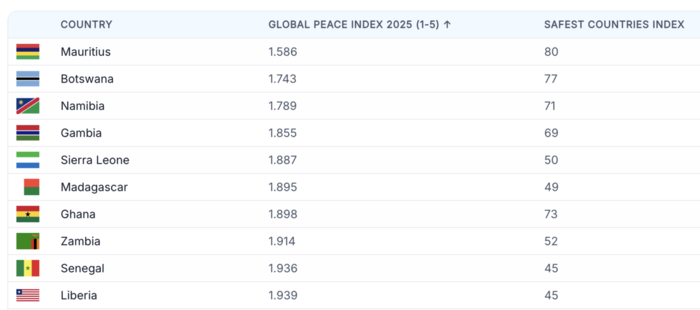
In this changing global landscape, Mauritius occupies a particularly interesting position.
It is not trying to become a noisy passport-selling jurisdiction. It is not built around drama, hype, or rushed decisions. Instead, Mauritius has developed a different identity over many years: that of a stable, respected, internationally connected island jurisdiction where people can live, invest, retire, and structure their affairs in a more considered way.
Mauritius combines several qualities that matter more and more in today's world.
It offers political stability and a relatively calm democratic environment. It has a respected legal and financial framework. English is widely used in business and administration. The island sits in a strategically useful time zone between Europe, Africa, and Asia. It also offers a climate and lifestyle that many people find deeply attractive once they experience them for themselves.
Equally important, Mauritius has not based its proposition on selling citizenship. Instead, it has placed greater emphasis on residency, long-term presence, and credible international positioning.
That may prove to be a major advantage in the years ahead.
Residency, Lifestyle, and Long-Term Logic
For many internationally mobile people, the appeal of Mauritius lies in the combination rather than any single feature.
It is not only about property. Not only about retirement permits. Not only about tax. Not only about weather. It is about how these things fit together.
The island offers the possibility of a different pace of life without requiring one to disappear from the modern world. It allows a person to remain internationally engaged while living in a place that often feels more manageable, more beautiful, and more human in scale.
That matters to people who are tired of complexity and noise.
It also matters to those who are thinking carefully about where they want to wake up each day over the next ten or twenty years.
The Next Great Relocation May Not Look Dramatic
The phrase “global migration of wealth” may sound dramatic, but in reality the process is often quiet, gradual, and highly personal.
It may begin with frustration over taxation. Or disappointment with politics. Or a growing sense that daily life has become too expensive, too stressful, too bureaucratic, or simply less enjoyable than it once was.
Then comes the research.
Then the comparison of jurisdictions.
Then the first visit.
Then the realization that another place may fit better than the place one always assumed would remain home forever.
That is how major shifts often happen. Not all at once, but one decision at a time.

A More Important Question Than “Where Can I Get a Passport?”
In the years ahead, more people are likely to ask not, “Where can I buy citizenship?” but something far more meaningful:
Where can I build a better life?
That question invites a higher-quality conversation.
It leads people to examine legal systems, daily life, healthcare, residency options, cost structures, property markets, culture, language, practical convenience, and long-term personal fit.
It moves the discussion away from quick fixes and toward serious planning.
And it is precisely that shift in thinking that is creating the new geography of wealth and lifestyle.
The Quiet Opportunity
As the world becomes more financially pressured, politically noisy, and technologically flexible, more people will begin rethinking where they live.
Some will do so for tax reasons. Some for lifestyle. Some for retirement. Some for family. Some for strategic diversification. Many will do so for a combination of all of the above.
The important point is that this is no longer a niche conversation. It is becoming one of the defining strategic decisions of modern life for internationally aware individuals and families.
Jurisdictions that can offer legal credibility, personal safety, livability, and long-term residency logic are likely to attract increasing attention.
Mauritius is one of those jurisdictions.
Not because it shouts the loudest. Not because it promises shortcuts. But because for the right person, at the right stage of life, it may represent something far more valuable: a stable, strategic, and genuinely enjoyable place to live the next chapter well.
Scott Oliver is a retired British writer and independent researcher living in Mauritius. A former Royal Marines Commando and former Wall Street investment professional, he has spent more than four decades living and working internationally across 14 countries. During that time, he worked extensively in international wealth management, cross-border asset protection, international business structuring and global residency planning.
Today, Scott's focus is no longer on managing money or providing professional advice. Instead, through MauritiusWealth.mu, he writes independent educational articles designed to help successful African business owners ask better questions, make better decisions and, when appropriate, identify the right expertise to help protect everything they have spent a lifetime building.
His articles are published solely for general educational and informational purposes and should not be regarded as legal, financial, tax, immigration, investment or other professional advice. Every business owner's circumstances are unique, and readers requiring professional assistance should always consult an appropriately qualified and licensed professional.