
Why More Wealthy South Africans Are Choosing Mauritius Over Switzerland or Dubai
The real-life story of a South African investor who found a safer, simpler, and smarter home for his wealth.
Pieter van der Merwe had built a good life in Cape Town. Successful in business. Respected in his community. His kids were in good schools, his wife was active in charity circles, and his financial portfolio had grown steadily for years.
But by early 2024, the warning signs were hard to ignore.
Load shedding was now an accepted part of life. Crime was inching closer to their neighbourhood. The Rand had lost nearly 20% of its value in under two years. And Pieter's accountant had just warned him that SARS was ramping up its scrutiny of offshore transactions.
The idea of quietly diversifying his wealth offshore—without triggering tax problems, unnecessary red flags, or permanent emigration—was starting to feel like trying to walk a tightrope during a storm.
Like many wealthy South Africans, Pieter had long considered Switzerland or Dubai as his “Plan B.” But after subscribing to the Mauritius Weekly SMART Island Report, he realised there was another option—one far more practical, and surprisingly more powerful.

The Offshore Reality Facing Wealthy South Africans
Pieter isn't alone. Thousands of high-net-worth South Africans are now looking for:
- A safe place to live or own property
- A friendly jurisdiction to hold and manage assets
- A simple structure for international business and investments
- A backup plan for themselves and their families
But the path to offshore security has become increasingly difficult.
Switzerland is highly regulated, with strict banking disclosure rules, increasing pressure from the OECD, and expensive residence programs—often requiring CHF 1 million+ in annual tax payments. And while Switzerland is respected, it's a cold, high-cost environment with no easy lifestyle or language transition for most South Africans.
Dubai, on the other hand, offers zero personal income tax—but it's not without its own issues. Residency is tied to property ownership or company formation, there's no path to permanent residency, and there are no tax treaties with South Africa. Many advisors now warn: if you don't show “economic substance,” SARS could still come knocking.
Worse still, moving large sums offshore from South Africa can trigger questions, delays, and even blocked transfers—unless it's structured carefully, legally, and with full transparency.
If you require legal, tax, accounting, corporate, banking, property, immigration or wealth planning advice relating to Mauritius or South Africa, you're welcome to contact the author Scott Oliver privately. Scott has built relationships with a carefully selected network of experienced independent professionals in both Mauritius and South Africa, including respected lawyers, accountants, tax specialists, bankers, fiduciary providers, immigration consultants and property professionals with established reputations and proven track records. Where appropriate, he may be pleased to introduce you to an independent professional whose experience best matches your particular circumstances and objectives. Any engagement, advice or professional relationship is entirely between you and the independent professional you choose to appoint.
What Pieter Discovered About Mauritius
When Pieter clicked on an article in the SMART Island Report titled “Why Smart Money Is Moving to Mauritius”, he was intrigued. After decades of looking north or east, he hadn't seriously considered looking just four hours from Johannesburg.
The more he read, the clearer it became.
Mauritius offered something rare: a country with real lifestyle appeal, strong legal protections, international banking infrastructure, and a well-regarded offshore sector that South Africans could access without breaking the rules.
Here's what sealed the deal:
1. Mauritius Offers Real, Renewable Residency
In Switzerland, Pieter would've had to spend millions to qualify for a residence permit—and even then, it was limited and complex. Dubai offered short-term visas, but with no long-term guarantee.
In Mauritius, Pieter discovered he could simply purchase a property worth USD $375,000 and receive a 10-year residency permit—renewable and available to his entire family. Better still, he didn't have to live there full-time to keep the permit active.
It wasn't a second passport scheme or a golden visa with fine print. It was clear, simple, and backed by law.
2. Legal Certainty and a Welcoming System
Unlike South Africa—where exchange controls, tax rules, and investment policies shift with each new minister—Mauritius offered a predictable, hybrid legal system based on both British Common Law and French Civil Code.
There were no capital gains taxes, no inheritance taxes, and no foreign exchange controls once Pieter's company and accounts were established.
And critically, Mauritius had a proper Double Taxation Agreement (DTA) with South Africa, allowing Pieter to legally hold assets and earn offshore income—while staying fully compliant with SARS and the Reserve Bank.
3. Low Taxes and Global Business Access
Mauritius has a flat 15% personal income tax, but many investors pay significantly less with exemptions, credits, or retirement income structures.
For his offshore investment company, Pieter qualified for a Global Business Company (GBC) license, which gave him access to an effective corporate tax rate of just 3%.
And because Mauritius is on the OECD's “white list” and complies with all international standards, he could confidently open international accounts, raise capital, and do cross-border business—without the stigma that sometimes follows South Africans operating out of Dubai or the Seychelles.

Seeing Mauritius with His Own Eyes
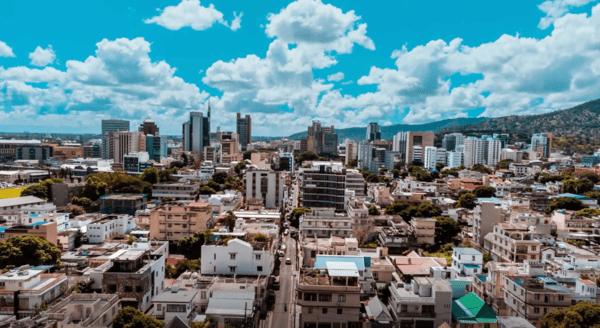
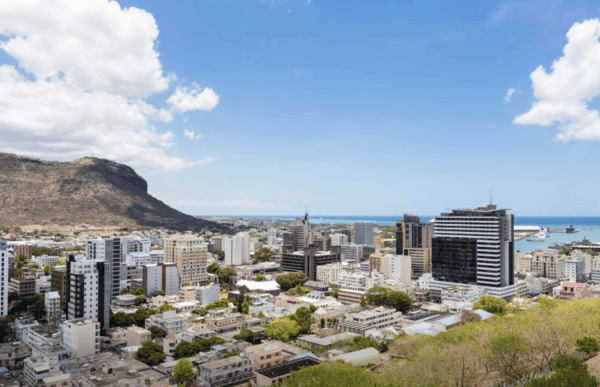
After a quick phone call to the MauritiusWealth.mu team, Pieter booked a VIP Property and Residency Tour. He flew in on a Monday morning, was greeted in fluent English, and checked into a beachfront resort overlooking the lagoon.
Over the next three days, he and his wife Annelie visited modern international schools, met with tax advisors and lawyers, viewed luxury properties in Tamarin, Grand Baie, and Black River—and got a feel for day-to-day life on the island.
It felt calm. Normal. Peaceful.
No crime fences. No power cuts. No political drama.
That night over grilled fish and Mauritian wine, Annelie looked across the table and said,
“Can you believe this is Africa?”
Six Months Later
Today, Pieter holds Mauritian residency, has successfully restructured part of his wealth through his GBC, and owns a modern villa ten minutes from the beach. His teenage daughter is preparing to attend a university with global accreditation. His wife is happier and more relaxed than she's been in years.
And every Sunday, Pieter still reads the Mauritius Weekly SMART Island Report—not because he's searching anymore, but because it reminds him how close he came to walking the wrong path.
Are You a South African Looking for a Safe Place for Your Wealth and a Real Plan 'B' for Your Family?
Then do what Pieter did: Subscribe to the Mauritius Weekly SMART Island Report and see why so many smart South Africans are now choosing Mauritius over Switzerland or Dubai.
If you require legal, tax, accounting, corporate, banking, property, immigration or wealth planning advice relating to Mauritius or South Africa, you're welcome to contact the author Scott Oliver privately. Scott has built relationships with a carefully selected network of experienced independent professionals in both Mauritius and South Africa, including respected lawyers, accountants, tax specialists, bankers, fiduciary providers, immigration consultants and property professionals with established reputations and proven track records. Where appropriate, he may be pleased to introduce you to an independent professional whose experience best matches your particular circumstances and objectives. Any engagement, advice or professional relationship is entirely between you and the independent professional you choose to appoint.
Scott Oliver is a retired British writer and independent researcher living in Mauritius. A former Royal Marines Commando and former Wall Street investment professional, he has spent more than four decades living and working internationally across 14 countries. During that time, he worked extensively in international wealth management, cross-border asset protection, international business structuring and global residency planning.
Today, Scott's focus is no longer on managing money or providing professional advice. Instead, through MauritiusWealth.mu, he writes independent educational articles designed to help successful African business owners ask better questions, make better decisions and, when appropriate, identify the right expertise to help protect everything they have spent a lifetime building.
His articles are published solely for general educational and informational purposes and should not be regarded as legal, financial, tax, immigration, investment or other professional advice. Every business owner's circumstances are unique, and readers requiring professional assistance should always consult an appropriately qualified and licensed professional.