
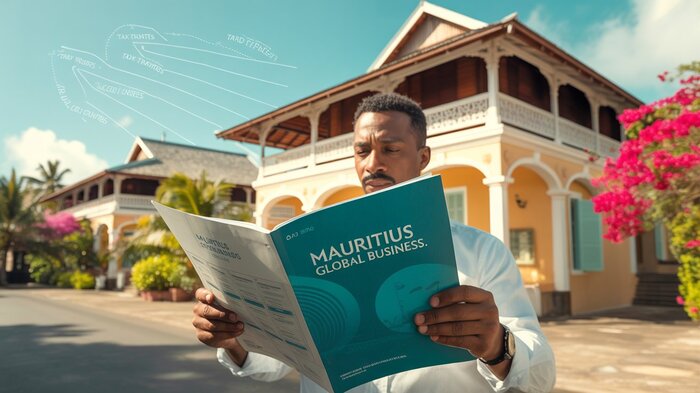
Why Serious Entrepreneurs Are Looking Beyond the Emirates and Turning to Mauritius
For many years the United Arab Emirates was promoted as the ultimate safe place for entrepreneurs.
The message was simple. Zero tax, smooth paperwork, and instant prestige. Very few people stopped to ask whether that story was still accurate. Now the situation is different. Corporate tax has arrived. Rules have tightened. The speaker has started to close their own company in the Emirates and believes many business owners should rethink their plans before following the old trend.
From Tax Free Dream To Tax Reality In The Emirates
The first major change is tax. Successful entrepreneurs now face a corporate tax rate in the Emirates. The era of easy zero tax for growing companies has passed.
Promotional videos and excited influencers still repeat the old message, but on the ground the experience is not the same. Business owners now deal with stricter reporting, heavier compliance, and rising costs. What once felt like a simple setup has turned into a more complex and expensive structure.
For many people, this removes the main reason they chose the Emirates in the first place. If the tax advantage is weaker and the costs and complexity are higher, the overall package becomes less attractive, especially for those who can choose from other international options.

Banking, Bureaucracy And A System That Prefers You To Stay Put
Banking has become a serious pressure point. Many banks in the Emirates struggle to understand entrepreneurs who live internationally. They expect the company owner to live in Dubai full time. Remote management is met with suspicion. Opening or maintaining accounts often involves long delays, detailed questioning, and unexpectedly high fees for simple tasks. A straightforward legal document can cost hundreds of dollars to sign.
At the same time, authorities are less comfortable with the idea that a person lives in one country and keeps their company in another. Physical presence and business presence are increasingly treated as the same.
That may suit someone who wants to settle in the Emirates and accept the new tax situation. It is far less suitable for global founders who move between countries and rely on flexible structures.

A Narrow Financial Ecosystem For Modern Global Business
Another limitation is the financial ecosystem itself. In parts of Asia there is a rich network of payment processors, merchant services, and multi currency platforms that support international companies.
By contrast, many well known global services are still unwilling to work with companies from the Emirates. This leaves entrepreneurs with fewer choices and less room for diversification.
Once a company is formed there, owners often discover that investment accounts in other countries are harder to obtain and that cross border banking is more restricted than expected.
This does not match the needs of digital businesses, online educators, consultants, and coaching brands that depend on smooth international payments and easy access to foreign markets.
Where The Emirates Still Makes Sense
The speaker does recognise one important strength. The Emirates has built a strong network of tax treaties. This can be useful for certain holding structures, especially for those who only want to own shares and collect dividends from investments in Europe or Africa. For that limited and focused role, a company in the Emirates can still work well, particularly for long term asset protection and estate planning.
However, for active businesses that sell services, process payments, and deal with clients every day, the practical benefits have weakened. What remains may not justify the new level of cost and complexity, especially when more balanced options exist elsewhere.

Why Mauritius Is Emerging As The Smarter Strategic Choice
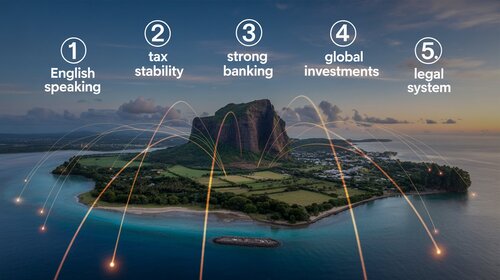
This is where Mauritius enters the picture. Mauritius offers a calmer, more predictable environment for serious entrepreneurs. The legal and tax systems are clear. The country welcomes international business and understands that many owners serve clients across several continents. Global banking is part of daily life there, not an exception that must be justified over and over.
Mauritius combines a business friendly tax regime with a respected financial centre. It has its own network of tax agreements, genuine international banks, and a regulatory culture that is professional but not hostile.
Entrepreneurs are not surprised by sudden policy shifts. Instead, they can plan ahead with confidence. This is crucial for founders who want to protect their assets, manage risk, and build a structure that will still make sense in ten or twenty years.
Freedom To Separate Life, Residence And Business
One of the most powerful advantages of Mauritius is freedom of design. You are not forced to live on the island in order to open a company there. If you want residency, clear pathways exist. If you prefer to keep your home in a different country, that is also possible. Your personal life, your company, your banking, and your investments do not need to sit on top of each other.
This separation allows entrepreneurs to choose where they live for lifestyle reasons, while placing their company where tax, regulation, and banking are most efficient. It is a more mature, more intelligent way to structure an international life. Instead of bending your life to satisfy one jurisdiction, you design a system that serves your goals.

The New Reality For Global Entrepreneurs
The world that promoted the Emirates as a simple zero tax haven no longer exists. Corporate tax, tougher banking rules, higher costs, and a narrow financial ecosystem have changed the game. For some people who want to live and invest there personally, the country can still play a role. For international founders who want mobility, flexibility, and diversified structures, the appeal has faded.
Mauritius has stepped forward as a more balanced choice. It offers stability, clarity, and real support for global entrepreneurs. That is why the speaker is closing their company in the Emirates and restructuring toward a model that looks to places like Mauritius instead. The message is simple. Do not build your future on yesterday's story. Choose a jurisdiction that fits the world as it is now and that will still work for you in the years ahead.
Scott Oliver is a retired British writer and independent researcher living in Mauritius. A former Royal Marines Commando and former Wall Street investment professional, he has spent more than four decades living and working internationally across 14 countries. During that time, he worked extensively in international wealth management, cross-border asset protection, international business structuring and global residency planning.
Today, Scott's focus is no longer on managing money or providing professional advice. Instead, through MauritiusWealth.mu, he writes independent educational articles designed to help successful African business owners ask better questions, make better decisions and, when appropriate, identify the right expertise to help protect everything they have spent a lifetime building.
His articles are published solely for general educational and informational purposes and should not be regarded as legal, financial, tax, immigration, investment or other professional advice. Every business owner's circumstances are unique, and readers requiring professional assistance should always consult an appropriately qualified and licensed professional.