
Think You Can Avoid U.S. Taxes Offshore? The IRS Says Think Again.
Across YouTube, Telegram, and glossy offshore pitch decks, one idea keeps getting recycled: that U.S. citizens can use foreign residency or corporate structures to legally stop paying taxes.
But here's what most Americans don't realize — the IRS doesn't care where you live, bank, or do business. You are still on the hook.
“Asset protection professionals and unscrupulous promoters continue to lure U.S. persons into placing their assets in offshore accounts and structures, saying they are out of reach of the IRS.… These assertions are not true.” IRS “Dirty Dozen: Offshore Accounts”  
“Trusts established to hide … assets and income … are considered fraudulent trusts.” IRS, Abusive Trust Tax Evasion Schemes – Talking Points 
The message is clear: the IRS has the final say. If you're a U.S. citizen, no amount of foreign banking, shell companies, or shady trusts will relieve your obligation to file, report, and pay on worldwide income.
The Costs of Offshore Evasion: Real Cases, Real Jail Time
These are not hypothetical threats — real Americans have faced severe consequences for using offshore schemes to hide income from the IRS.
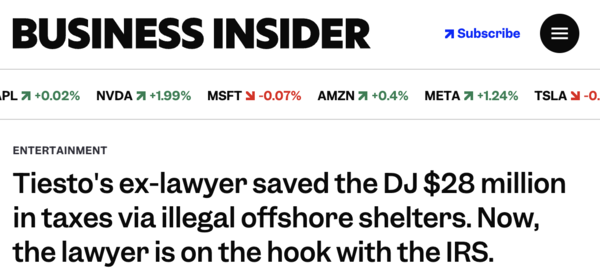
- Frank Butselaar, known as “Tiësto's tax lawyer,” orchestrated offshore strategies that helped evade $28 million in U.S. taxes. He was prosecuted by the IRS and Department of Justice for filing false tax returns and promoting illegal offshore arrangements. He was sentenced to 30 months in federal prison and faces over $19 million in restitution.
- Peter Joseph Tignini, a Texas citizen working in the UAE and Qatar, failed to report more than $4.7 million in foreign income over several years. After understating his earnings from 2013 to 2017, he was sentenced to 41 months in prison for offshore tax evasion.
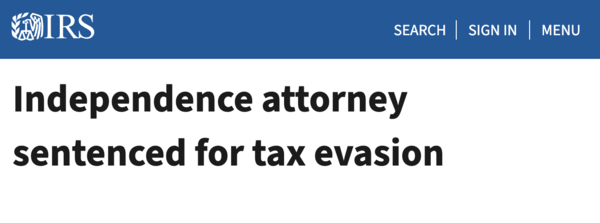
- John C. Carnes, an American attorney, attempted to evade $794,540 in U.S. taxes. His case resulted in a 21-month prison sentence along with full restitution to the IRS.
- Billionaire Igor Olenicoff used offshore trusts and admitted to filing false tax returns. Although he avoided prison, he was hit with a $52 million fine.
- In a related case, toy mogul Ty Warner hid $106 million in offshore accounts. He received probation and community service, but only after prosecutors emphasized that prison time is the usual outcome for this level of evasion.
- Even celebrities aren't immune. Actor Wesley Snipes was convicted of misdemeanor tax evasion, in part for using the discredited “861 argument” to justify his non-payment. He ultimately served 28 months in federal prison.
These cases are a stark reminder: the IRS has the power, the reach, and the legal authority to pursue and punish Americans who try to hide income offshore.
The IRS Rulebook: Penalties Are Severe
Even before jail comes:
- Civil FBAR penalty for undisclosed foreign bank account: Up to $500,000 and 10 years imprisonment  .
- Tax evasion (18 U.S.C. § 7201): Up to 5 years in prison per count, plus fines and restitution.
- Criminal fraud charges often include money laundering or conspiracy counts.
And that's just the beginning—forfeit assets, face lifetime IRS scrutiny, ruined reputations, bank account freezes, and loss of passport.
IRS Has the Last Word
Despite flashy offshore pitches, the IRS always wins in the end. From official statements to powerful convictions, here's the honest truth:
“The IRS reminds U.S. persons that they are taxable on their worldwide income, unless they can establish there is a statutory or treaty exemption.” 
“Wire income overseas and fail to report it… [foreign trusts] are considered fraudulent trusts.” 
These are not warnings—they are legal realities. Every American passport holder must comply—even if they live abroad, hold a second passport, open offshore accounts, or claim residency in low-tax countries.
Bottom Line for U.S. Citizens
- You must file Form 1040 annually—worldwide income included.
- You must report (FBAR/FATCA) every foreign account above reporting thresholds.
- You must pay taxes or qualify for legitimate tax reliefs (FEIE, FTC), but never rely on offshore opacity.
- You can go to prison, pay fines of millions, and lose everything if you evade.
Your Best Defense = Compliance
- Disclose all offshore accounts and income.
- Use Foreign Earned Income Exclusion (FEIE), Foreign Tax Credit, and foreign housing exclusions legally.
- When in doubt, consult a U.S. tax lawyer or CPA specializing in expat compliance.
What's Your Advice Scott?
The bottom line is simple: as a U.S. citizen, there is no legal way to “offshore” your way out of tax obligations. No foreign residency, trust structure, or clever entity formation will exempt you from reporting your worldwide income to the IRS. In fact, these tactics often increase your risk of audits, penalties, and even criminal prosecution.
If someone tells you otherwise, they're either misinformed—or putting your future at serious risk.
Don't rely on myths. Rely on the law. Because when it comes to U.S. taxes, the IRS always has the final word.
A Personal Note About U.S. Citizens from MauritiusWealth.mu
At MauritiusWealth.mu, we warmly welcome U.S. citizens who want to invest, launch businesses, or build a fulfilling life in Mauritius. We're here to help you navigate the opportunities this extraordinary island offers.
However, we want to be absolutely clear: We do not assist U.S. citizens in avoiding taxes.
As long as you hold a U.S. passport or green card, you remain subject to U.S. tax law — and that includes reporting and paying taxes on your worldwide income, no matter where you live or how your business is structured.
If you're looking for responsible, transparent guidance to structure your life or investments in Mauritius within the law, we're happy to help.
But if someone promises you zero-tax schemes offshore while keeping your U.S. citizenship, we encourage you to walk away — quickly.
Scott Oliver is a retired British writer and independent researcher living in Mauritius. A former Royal Marines Commando and former Wall Street investment professional, he has spent more than four decades living and working internationally across 14 countries. During that time, he worked extensively in international wealth management, cross-border asset protection, international business structuring and global residency planning.
Today, Scott's focus is no longer on managing money or providing professional advice. Instead, through MauritiusWealth.mu, he writes independent educational articles designed to help successful African business owners ask better questions, make better decisions and, when appropriate, identify the right expertise to help protect everything they have spent a lifetime building.
His articles are published solely for general educational and informational purposes and should not be regarded as legal, financial, tax, immigration, investment or other professional advice. Every business owner's circumstances are unique, and readers requiring professional assistance should always consult an appropriately qualified and licensed professional.

Expert Resources Used To Research and Write This Article:
- IRS: Abusive Trust Tax Evasion Schemes – Talking Points. https://www.irs.gov/businesses/small-businesses-self-employed/abusive-trust-tax-evasion-schemes-talking-points
- IRS: Dirty Dozen: Beware of Abusive Tax Avoidance Schemes. https://www.irs.gov/newsroom/dirty-dozen-beware-of-abusive-tax-avoidance-schemes
- What Is Offshore Tax Fraud? Overseas Tax Evasion Examples. https://www.irsstreamlinedprocedures.com/what-is-offshore-tax-fraud-overseas-tax-evasion-examples/
- A Prison Sentence for Working Overseas and Evading U.S. Taxes. https://www.irsstreamlinedprocedures.com/a-prison-sentence-for-working-overseas-and-evading-u-s-taxes/
- Independence Attorney Sentenced for Tax Evasion. https://www.irs.gov/compliance/criminal-investigation/independence-attorney-sentenced-for-tax-evasion
- WSJ: Alleged Tax Fraud by Douglas Edelman. https://www.wsj.com/us-news/law/douglas-edelman-alleged-tax-fraud-who-ee65ea61
- Business Insider: Tiësto's Tax Lawyer Saved $28M Through Illegal Offshore Accounts. https://www.businessinsider.com/tiesto-saved-28m-through-illegal-offshore-accounts-2025-3
- Wikipedia: Igor Olenicoff. https://en.wikipedia.org/wiki/Igor_Olenicoff
- Wikipedia: Ty Warner. https://en.wikipedia.org/wiki/Ty_Warner
- Wikipedia: Wesley Snipes. https://en.wikipedia.org/wiki/Wesley_Snipes
- Taxpayer Advocate Report on Offshore Voluntary Disclosure Programs. https://www.taxpayeradvocate.irs.gov/wp-content/uploads/2020/08/Most-Serious-Problems-IRS-Offshore-Voluntary-Disclosure-Programs.pdf