
Mauritius and the Global Fertility Collapse: A Future Few People Are Talking About
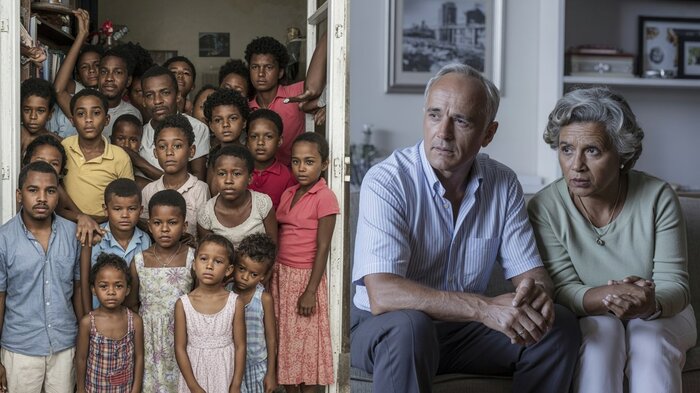
Imagine driving through Mauritius in the year 2080. The beaches are still beautiful, the roads are still there, and at first glance the island appears much the same. Yet something subtle has changed.
The schools are smaller, there are fewer young families, and healthcare and pensions increasingly dominate political debate as the country quietly becomes older. Some businesses struggle to recruit workers, entire generations are noticeably smaller than the ones before them, and the social rhythm of the island begins to feel different.
This may sound far away, but versions of this future are already unfolding in countries such as South Korea, Japan, Italy, Spain, and China. According to long-term demographic projections, Mauritius may be moving in the same broad direction.
For decades, much of the world feared overpopulation. Today, an increasing number of economists, governments, and demographers are beginning to worry about something very different. Not too many people. Too few.

The South Korea Warning
If you want to understand why this issue is attracting global attention, look at South Korea. The country now has one of the lowest fertility rates ever recorded in a modern society. Its fertility rate fell to 0.72 children per woman in 2023 and rose only slightly to 0.75 in 2024, still far below the level needed to maintain a stable population.
That number may sound abstract, but the implications are enormous. Some projections suggest South Korea's population could shrink by roughly half by the end of this century if current demographic patterns continue. That is not a minor statistical adjustment. It is a possible transformation of society itself.
In parts of South Korea and Japan, the effects of aging and low fertility are already visible. Schools close because there are not enough children. Rural towns lose younger families. Homes sit empty. Local economies become older, quieter, and less dynamic.
The question for Mauritius is not whether the island will become South Korea. It probably will not. The better question is whether Mauritius is entering the same broad demographic era, where fewer births, longer lives, and smaller younger generations gradually reshape the country.

The Simple Math Behind the Problem
For a population to remain broadly stable over time, countries generally need a fertility rate of around 2.1 children per woman. This is often called the replacement rate. It does not mean every woman must have exactly two children. It simply means that, across the whole population, enough children are being born to replace the older generation.
When fertility falls below that level for many years, the population eventually ages and may begin to shrink unless immigration fills the gap. When fertility falls very far below replacement, the effects compound across generations.
Imagine 100 grandparents, then 50 parents, then 25 grandchildren, then 12 great-grandchildren. That is a simplified example, but it helps people understand what low fertility means in real life. The issue is not just fewer babies. It is the gradual narrowing of the entire future population.
Mauritius Has Changed Dramatically Too
Mauritius may seem far removed from the demographic crisis now discussed in East Asia, but the island has already gone through a dramatic fertility transition. In earlier generations, large families were common. Today, Mauritius is far below replacement level.
Our World in Data reports that Mauritius had a total fertility rate of 1.24 births per woman in 2023. World Bank and FRED data show a slightly higher figure of 1.44 for 2024, but both numbers point in the same direction: Mauritius is well below the 2.1 level generally needed for long-term population stability.
That matters because Mauritius is a small country. Demographic change becomes easier to feel in a small island society. Fewer births are not just numbers in a spreadsheet. They eventually affect classrooms, family networks, the labour market, public finances, healthcare demand, and the balance between young and old.

Could Mauritius Eventually Become Much Smaller?
According to United Nations-based demographic projections, Mauritius may already have reached, or be very close to, its peak population. While forecasts differ depending on fertility, immigration, and life expectancy assumptions, several long-term models now project gradual population decline over the coming decades.
Mauritius currently has a population of roughly 1.27 million people. Some projections suggest the population could fall to around 1.1 million by 2050 and continue declining beyond that point if fertility remains well below replacement level.
Longer-term projections become even more striking. PopulationPyramid.net, using United Nations data, shows Mauritius at roughly 1.11 million people in 2050. Other UN-based projection summaries show Mauritius potentially declining to roughly 574,000 by 2100 if current long-term demographic assumptions hold.
For a small island nation, that would represent a profound demographic transformation. It would be roughly equivalent to removing the population of several major Mauritian towns from the country's future population.
This does not mean Mauritius would suddenly become empty. Population decline happens slowly and almost invisibly at first. Fewer births today become smaller classrooms tomorrow, smaller workforces decades later, and eventually an older and smaller society overall.
The deeper issue is not simply fewer people. It is the changing balance between young and old, workers and retirees, taxpayers and healthcare costs, economic dynamism and demographic aging.
What Population Decline Actually Looks Like
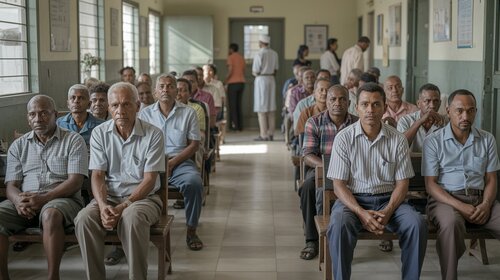
The phrase “population decline” does not mean much to most people. It sounds technical, distant, and bloodless. But the lived reality is much easier to understand.
It may mean fewer children entering primary school. It may mean fewer young workers entering hotels, hospitals, construction firms, technology companies, farms, restaurants, and public services. It may mean more families with only one child, fewer cousins, fewer siblings, and smaller extended family gatherings.
It may also mean more pressure on the working-age population. If the number of elderly people rises while the number of younger taxpayers stagnates or falls, healthcare and pension systems become harder to finance. The country does not collapse overnight. It simply becomes more expensive to maintain.
For Mauritius, this is especially important because the island already depends heavily on sectors that need reliable labour: tourism, construction, healthcare, retail, public services, financial services, and domestic support work. A smaller younger generation would make recruitment harder and could increase dependence on foreign workers.

The Schoolroom Is Where People Will See It First
One of the clearest early signs of demographic change is the classroom. When fewer babies are born year after year, the effect eventually reaches nursery schools, primary schools, secondary schools, and universities.
A country can hide many problems in economic statistics, but it cannot hide empty seats in a classroom. Fewer children eventually mean smaller schools, merged classes, reduced demand for teachers, and changing priorities in public education.
While Mauritius is not yet experiencing the dramatic school closures seen in parts of Japan or South Korea, demographic changes are already becoming visible in educational statistics. Secondary school enrollment has declined in recent years, and the 2022 census showed the share of children under 15 falling significantly while the elderly population continued rising.
This is why demographics are so powerful. They begin quietly, almost invisibly, then years later they appear everywhere at once.
Why Are People Having Fewer Children?
There is no single answer. It would be too simplistic to say people are selfish, anti-family, or careless about the future. The truth is more complex and more interesting.
Across the world, fertility tends to fall as societies become more urban, educated, expensive, and career-driven. Children who were once economic contributors in agricultural societies become major financial responsibilities in modern urban life. Housing is expensive. Education is expensive. Childcare is expensive. Transport is expensive. Time itself feels expensive.
Young people also marry later, settle later, and often spend their twenties and thirties trying to build careers, pay bills, support parents, or secure housing. By the time many couples feel ready for children, they may have fewer fertile years left than previous generations.
There is also a psychological dimension. Many younger adults look at the future with uncertainty. They worry about job security, debt, housing, social instability, climate stress, political dysfunction, and whether they can give children a better life than they had. A society that wants children must also create a sense of hope.

Why Elon Musk Keeps Warning About This
Elon Musk has repeatedly argued that population collapse caused by low birth rates may be one of the greatest long-term risks facing civilization. Whether one agrees with him or not, his central argument is simple: complex societies need younger generations to sustain them.
Without enough young people, economies lose workers, tax systems weaken, pension burdens rise, healthcare costs increase, military capacity can decline, and innovation may slow. A society can have machines, money, buildings, and technology, but it still needs people to build, repair, care, invent, teach, raise families, and carry the culture forward.
Critics of Musk argue that climate change, inequality, war, ecological damage, and resource pressure may be greater threats. They also point out that smaller populations can reduce environmental strain. That is a fair debate. But it does not remove the demographic question. What happens to modern economic systems built around constant growth if the number of young people keeps falling?
The Great Reversal
For much of the 20th century, humanity was warned about overpopulation. The fear was that too many people would overwhelm food supplies, cities, housing, and natural resources.
Now many countries are facing the opposite problem. South Korea, Japan, Italy, Spain, China, Singapore, Taiwan, Thailand, and many others are struggling with fertility rates far below replacement level. Even countries that once had large families have seen birth rates fall rapidly as urbanization, education, cost of living, and cultural expectations changed.
This is one of the great reversals of modern history. The world spent decades worrying that people were having too many children. Now some of the most advanced societies on Earth are worried that people are not having enough.

The Mauritius Question
Mauritius should not panic. Panic rarely produces intelligent policy. But Mauritius should think seriously about the future it is building.
If fewer young Mauritians marry, fewer have children, and more delay family formation because housing and daily life feel financially impossible, then the consequences will not remain private. They will eventually become national.
Demographics shape the future quietly. They determine how many children enter school, how many workers enter the labour force, how many taxpayers support public systems, how many elderly people need care, and how many young families keep communities alive.
This is why fertility collapse is not only a family issue. It is an economic issue, a social issue, a healthcare issue, a labour issue, and a national planning issue.

A Future Worth Thinking About
None of this means Mauritius is doomed. Population projections are not destiny. Fertility can change. Immigration policy can change. Housing policy can change. Work culture can change. Family support systems can change.
But the first step is to understand the issue in human terms. Low fertility is not just a statistic. It is the quiet reshaping of a country's future.
For decades, humanity feared overpopulation. Now many countries are beginning to fear the opposite. The real question may not simply be whether populations rise or fall. It may be whether modern societies still create the conditions in which people feel secure enough, hopeful enough, and supported enough to build families and imagine a future worth investing in.
Scott Oliver is a retired British writer and independent researcher living in Mauritius. A former Royal Marines Commando and former Wall Street investment professional, he has spent more than four decades living and working internationally across 14 countries. During that time, he worked extensively in international wealth management, cross-border asset protection, international business structuring and global residency planning.
Today, Scott's focus is no longer on managing money or providing professional advice. Instead, through MauritiusWealth.mu, he writes independent educational articles designed to help successful African business owners ask better questions, make better decisions and, when appropriate, identify the right expertise to help protect everything they have spent a lifetime building.
His articles are published solely for general educational and informational purposes and should not be regarded as legal, financial, tax, immigration, investment or other professional advice. Every business owner's circumstances are unique, and readers requiring professional assistance should always consult an appropriately qualified and licensed professional.
Expert Resources and Further Reading
- United Nations World Population Prospects 2024
The core global demographic reference for population estimates, fertility trends, aging, and long-term country projections, including Mauritius.
Read the UN population projections - Statistics Mauritius: Official National Statistics
Mauritius' official statistics agency, useful for local population, births, deaths, labour, education, and social indicators.
Read at Statistics Mauritius - Our World in Data: Mauritius Population and Demography Profile
A clear, visual country profile showing Mauritius' fertility rate, population structure, life expectancy, and demographic trends over time.
Read the Mauritius demographic profile - World Bank: Fertility Rate, Total, Mauritius
World Bank data on Mauritius' total fertility rate, useful for checking recent fertility figures against other international datasets.
Read the World Bank fertility data - The Lancet: Global Fertility Forecasts to 2100
A major peer-reviewed demographic analysis showing how fertility rates are projected to decline across much of the world this century.
Read the study - OECD: Society at a Glance 2024, Fertility
A high-quality policy resource explaining falling fertility, replacement levels, family formation pressures, and the social implications of demographic aging.
Read the OECD fertility analysis - Statistics Korea: Birth Statistics
Official Korean government statistics documenting South Korea's extremely low fertility rate, useful as the article's global warning example.
Read the Korean birth statistics