
The Billion-Dollar Divorce: What South African Entrepreneurs Can Learn from the World's Most Expensive Divorce Settlements
Most successful entrepreneurs spend decades building a business.
Very few spend even one afternoon planning what would happen to it if their marriage ended.
For a successful business owner, divorce is rarely just a private family matter. It can become a forced financial examination of almost everything you have spent years creating: the company, the shares, the properties, the retirement capital, offshore interests, trusts, investment structures and even the legacy you hoped one day to leave to your children.
And perhaps the biggest mistake of all is assuming that this is only a problem for billionaires.
The biggest mistake is assuming this only happens to billionaires.
The numbers may be very different for a South African entrepreneur, but the underlying problem is exactly the same.
When significant wealth has been accumulated during a marriage, assets may suddenly need to be identified, independently valued, negotiated and, depending on the applicable matrimonial regime and circumstances, divided.
Imagine This...
You have spent twenty-five years building your company.
The business is profitable. Your employees depend on it. Your family depends on it. Most of your personal wealth is tied up in it.
Then one day your accountant or attorney tells you:
"The company needs to be independently valued."
Not because you are selling it.
Not because you are raising capital.
Because you are getting divorced.
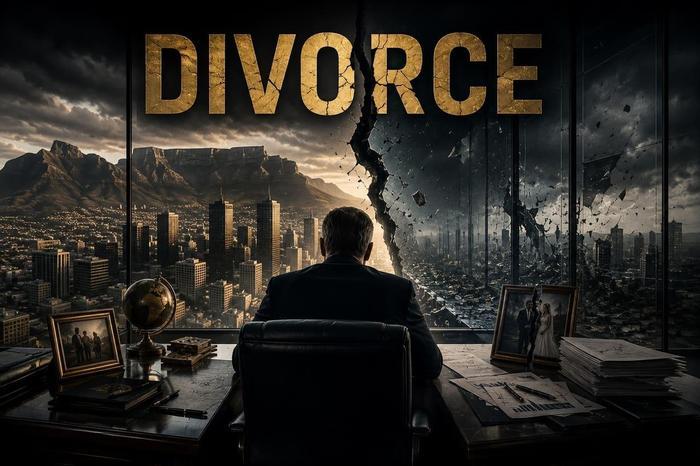
Suddenly a business that may have taken most of your working life to create becomes part of one of the largest financial negotiations you may ever face.
That is precisely what makes some of the world's largest divorce settlements so instructive.
Free Executive Decision Guide
Protecting Everything You've Built™
20 Executive Questions Every South African Business Owner Should Ask Before Divorce Becomes a Business Crisis.
Read NowThe Numbers Are Extraordinary. The Lesson Is More Important.
When Bill Gates divorced in 2021, an estimated US$76 billion in marital assets was reportedly involved.
Jeff Bezos's divorce resulted in approximately US$38 billion worth of Amazon shares being transferred to MacKenzie Scott.
South Korean business leader Chey Tae-won was ordered to pay a settlement approaching US$1 billion.
Most South African business owners will never face anything remotely close to these numbers.
But that isn't the point.
The real lesson is not how much money changed hands.
It is that businesses and fortunes built over decades can suddenly become subject to valuation, negotiation, litigation and division.

For an entrepreneur, divorce can therefore become far more than a personal event.
It can become one of the largest financial transactions of your lifetime.
And while the final settlement is negotiated after the relationship has broken down, many of the structural questions that ultimately matter could have been considered years earlier, during a period of stability.
That is why the most useful question is not:
"How much did these billionaires lose?"
It is:
"What should a successful business owner think about long before a personal crisis ever occurs?"
Five Questions Every South African Business Owner Should Ask
- Is your business worth far more than you think?
Many entrepreneurs naturally focus on turnover, cash flow and annual profits. But when a business needs to be valued, the relevant figure may be its total enterprise value. A profitable company can be worth many times its annual earnings, potentially creating financial obligations far larger than the cash actually sitting in your bank account. - How much of your wealth is actually liquid?
Being worth R100 million does not mean you have R50 million available in cash. For many entrepreneurs, the majority of their wealth is locked inside the company, property, private investments or other illiquid assets. A large financial settlement can therefore create severe pressure even when the business itself remains highly successful. - Could a personal dispute affect control of your company?
For many founders, the greatest concern is not simply writing a cheque. It is the possibility that ownership rights, shareholdings, voting rights or the financial pressure created by a settlement could affect strategic control of the company they spent decades building. - Have you considered these issues while everything is still going well?
Planning undertaken during periods of stability generally offers a much broader range of lawful options than decisions made after a dispute has already begun. Matrimonial property arrangements, shareholder agreements, succession planning, estate planning and ownership structures are all matters that are generally better considered before a crisis develops. - Are you spending more time growing your wealth than protecting what you have already built?
Entrepreneurs routinely devote enormous energy to increasing revenue, reducing tax leakage, expanding into new markets and improving profitability. Far fewer spend the same amount of time considering what could threaten the wealth they have already created.

The Ten Billion-Dollar Lessons
The following cases illustrate just how financially significant divorce can become when substantial businesses, investments and family wealth are involved.
| Rank | Couple | Year | Country | Estimated Amount | Notes |
|---|---|---|---|---|---|
| 1 | Bill & Melinda Gates | 2021 | United States | $76 billion | Approximate marital assets involved. |
| 2 | Jeff Bezos & MacKenzie Scott | 2019 | United States | $38 billion | Approximate value of Amazon shares transferred. |
| 3 | Bill Gross & Sue Gross | 2017 | United States | $1.3 billion | Approximate settlement. |
| 4 | Chey Tae-won & Roh Soh-yeong | 2024 | South Korea | $1 billion | Court award; subject to appeal. |
| 5 | Mohammed bin Rashid Al Maktoum & Princess Haya | 2021 | United Kingdom | $730 million | Approximate USD equivalent of £554 million. |
| 6 | Farkhad Akhmedov & Tatiana Akhmedova | 2017 | United Kingdom | $595 million | Approximate USD equivalent of £453 million; long-running enforcement dispute. |
| 7 | Brad Pitt & Angelina Jolie | 2024 | United States | $164 million | Approximate value associated with winery/business interests, not a direct cash settlement. |
| 8 | Walid Juffali & Christina Estrada | 2016 | United Kingdom | $99 million | Approximate USD equivalent of £75 million. |
| 9 | Dale Vince & Kate Vince | 2024 | United Kingdom | $57 million | Approximate USD equivalent of £43.5 million. |
| 10 | Clive & Anna Standish | 2023 | United Kingdom | $33 million | Approximate USD equivalent of final £25 million award. |
This Is Really About Business Continuity
Divorce may be the event that exposes the vulnerability, but the underlying issue is much broader.
- How resilient is everything you have built if an unexpected personal, legal or financial event occurs?
- What happens to your company if ownership becomes disputed?
- What happens if a large amount of liquidity is suddenly required?
- What happens if shares need to be valued?
- What happens if your estate planning, shareholder agreements, matrimonial arrangements and corporate structures were all created independently of one another?
Successful entrepreneurs routinely build contingency plans for customers, suppliers, employees, cyber risks and economic downturns.
Personal financial risk deserves the same level of strategic attention.
Planning Is Not About Hiding Assets
There is an important distinction.
The objective of sensible advance planning is not to evade legitimate obligations, conceal assets or frustrate a spouse's lawful rights.
It is to understand your legal position, obtain qualified professional advice, improve business continuity, coordinate your estate and ownership arrangements and make deliberate decisions while circumstances are stable.
The later those questions are addressed, the fewer options may remain available.
This is why asset protection, succession planning, matrimonial planning and corporate governance should be treated as part of long-term business architecture rather than emergency measures introduced after a dispute has started.
I've prepared a complimentary guide specifically for South African business owners:
The South African Business Owner's Guide to Protecting Everything You've Built Before Divorce
It explores the questions successful entrepreneurs should consider before problems arise, including business ownership, liquidity, succession, matrimonial risk, international structuring and the importance of coordinating advice from the right legal, tax and corporate professionals.
Final Thoughts
Nobody builds a successful business expecting their marriage to fail.
Nor should anyone structure their life around the expectation that it will.
But history repeatedly demonstrates that divorce can become one of the largest financial events an entrepreneur ever experiences.
The objective is not fear.
It is preparedness.
Businesses are built over decades.
Protection should be considered with the same long-term perspective.
If you have spent twenty, thirty or forty years building a successful company, creating family wealth and planning a legacy, then understanding how those assets might be affected by an unexpected personal event is simply responsible planning.
Because when businesses built over a lifetime can suddenly become subject to valuation, negotiation and division, every successful business owner should eventually ask one uncomfortable but important question:
If the unexpected happened tomorrow, how resilient would everything I've spent a lifetime building really be?
If you would like to explore that question in greater depth, get your complimentary copy of The South African Business Owner's Guide to Protecting Everything You've Built Before Divorce.
The next few minutes you spend thinking about these issues could prove far more valuable than the years spent dealing with them after a crisis begins.
Free Executive Decision Guide
Protecting Everything You've Built™
20 Executive Questions Every South African Business Owner Should Ask Before Divorce Becomes a Business Crisis.
Read NowScott Oliver is a retired British writer and independent researcher living in Mauritius. A former Royal Marines Commando and former Wall Street investment professional, he has spent more than four decades living and working internationally across 14 countries. During that time, he worked extensively in international wealth management, cross-border asset protection, international business structuring and global residency planning.
Today, Scott's focus is no longer on managing money or providing professional advice. Instead, through MauritiusWealth.mu, he writes independent educational articles designed to help successful African business owners ask better questions, make better decisions and, when appropriate, identify the right expertise to help protect everything they have spent a lifetime building.
His articles are published solely for general educational and informational purposes and should not be regarded as legal, financial, tax, immigration, investment or other professional advice. Every business owner's circumstances are unique, and readers requiring professional assistance should always consult an appropriately qualified and licensed professional.