

When Governments Tell You How They Will Tax Your Wealth, Including Exit Taxes… Believe Them
Across Europe, governments are quietly studying how wealth, assets, capital gains, inheritances, and exit taxes can be made more effective. Most people will never read these reports. They are not written for the evening news. They are dense, technical, and easy to ignore.
But that is precisely why they matter.
Major tax changes rarely arrive from nowhere. They are usually signalled years in advance through studies, consultations, expert papers, fiscal reviews, and policy discussions that attract little public attention at the time. By the moment a proposal becomes a headline, much of the intellectual groundwork has already been done.
That is what makes the European Commission's April 2026 study, “Wealth Taxation, Including Net Wealth, Capital and Exit Taxes”, worth reading carefully.

The Document Most People Will Never Read
The study is not a campaign speech. It is not a manifesto. It does not announce a single Europe-wide wealth tax. Its significance is more subtle than that. It is a detailed examination of how governments can tax wealth more effectively in a world where assets are increasingly mobile, ownership structures are often complex, and public finances are under pressure.
In plain English, the question running through the report is this: how can modern states collect more tax from accumulated wealth, not merely from annual income?
That distinction matters. Income is usually visible, regular, and often taxed at source. Wealth is different. It may sit inside property, portfolios, private companies, trusts, foundations, pensions, insurance wrappers, or cross-border structures. It can compound quietly for years. It can also move, or appear to move, before governments are ready to tax it.

The Shift From Income to Accumulated Wealth
For decades, most citizens understood taxation mainly through the lens of income. You earned money, you declared it, and you paid tax. That model still dominates public debate, but it no longer captures the full direction of policy thinking.
Across Europe, policymakers are paying closer attention to what people own, what they inherit, what they sell, what they leave behind, and what they take with them when they change tax residence. This does not mean every country will introduce the same taxes. Nor does it mean every proposal will survive political opposition. But the direction of travel is becoming harder to ignore.
The focus is widening from income alone to the broader taxation of accumulated wealth.
Free Chapter
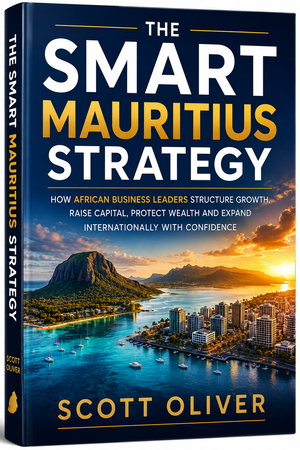
The SMART Mauritius Strategy
Discover how African business leaders use smarter structures to raise capital, protect wealth and expand internationally.
Download NowThe Five Policy Levers Already in View
The European Commission study does not present one simple solution. Instead, it reviews a set of policy tools that already exist in different forms across Europe. The important point is that these are not theoretical inventions. They are existing mechanisms that can be adjusted, tightened, coordinated, or expanded.
- Inheritance and Gift Taxes. As large amounts of wealth pass between generations, governments are increasingly interested in how inherited wealth is taxed, where exemptions apply, and whether current systems capture the largest transfers effectively.
- Capital Gains Tax Tightening. Governments are examining how gains are taxed, especially where tax can be delayed for long periods by simply not selling assets. The treatment of unrealised gains, stepped-up basis rules, exemptions, and preferential regimes is likely to remain under scrutiny.
- Exit Taxes. Some countries already impose taxes when individuals or companies leave, particularly where unrealised gains were built up during the period of residence. The underlying idea is simple: if wealth was accumulated while someone benefited from one country's system, that country may seek to tax part of the gain before the person or structure exits.
- Net Wealth Taxes. Broad annual wealth taxes remain politically and administratively difficult, but they have returned to the policy conversation, especially where thresholds are high and the target is clearly defined as high-net-worth individuals.
- Reporting, Registers, and Enforcement. This may be the most important lever of all. Wealth taxation depends on visibility. Asset registers, beneficial ownership reporting, automatic information exchange, digital tax administration, and cross-border cooperation all make it easier for governments to know what exists, who owns it, and where it has moved.
Seen together, these tools point to a broader policy architecture. The issue is not only whether a government introduces a new tax. It is whether the state is building the information systems, legal mechanisms, and enforcement capacity to make wealth harder to hide, defer, or relocate without consequence.

Why This Moment Is Different
Debates about wealth taxation are not new. What is different now is the fiscal, demographic, and technological environment in which those debates are taking place.
Many European governments are dealing with higher debt, aging populations, rising healthcare costs, defence spending pressures, housing strain, and public demands for better services. At the same time, private wealth has grown substantially over recent decades and is often concentrated among older households and higher-net-worth groups.
That creates an obvious political and fiscal tension. Governments need revenue. Younger voters often feel locked out of asset ownership. Meanwhile, large pools of private wealth sit in property, investments, companies, and inheritance channels that may be taxed less consistently than earned income.
The technical barriers are also lower than they were twenty years ago. Information exchange between tax authorities is more advanced. Beneficial ownership reporting has expanded. Financial accounts are more visible. Digital administration gives governments better tools for monitoring assets and transactions. What was difficult to enforce in the past is becoming more practical.

The Comforting Illusion That This Only Affects Billionaires
Many people assume wealth taxation is only a billionaire problem. That assumption is comforting, but incomplete.
It is true that new wealth taxes are usually presented as measures aimed at the very top. Politically, that is the easiest way to introduce them. High thresholds, narrow targeting, and language about fairness make such policies easier to sell to the public.
But tax systems have a long history of expanding once the machinery exists. Thresholds can be frozen. Exemptions can be reduced. Definitions can be widened. Reporting obligations can be extended. Measures introduced for one class of taxpayer can later become normalised for a broader group.
This does not mean every homeowner or investor is about to face an annual wealth tax. It does mean that successful families, business owners, internationally mobile professionals, and people with substantial property or investment portfolios should not assume the conversation will permanently stop at billionaires.

The Question Is Not Whether the Door Is Open Today
The more important question is when options become harder to exercise.
Tax systems rarely close doors overnight. More often, they narrow them gradually. First comes research. Then consultation. Then reporting obligations. Then enforcement capacity. Then legal changes. By the time the public fully understands the consequences, the infrastructure is often already in place.
That is especially relevant for exit taxes. Moving country is often imagined as a personal lifestyle decision: a new residence, a better climate, a lower tax environment, or a more attractive retirement destination. But once exit tax rules apply, departure can become a taxable event. The decision to leave may trigger consequences on unrealised gains that were built up before the move.
For internationally mobile families, that changes the planning equation. The question is no longer simply, “Where would I like to live?” It becomes, “What will my current country tax before I am allowed to leave cleanly?”
The Likely Sequence
The danger is not one dramatic announcement. It is a sequence of smaller developments that gradually change the practical reality.
- Phase 1: Research and Signalling. Governments publish studies, review international models, test political language, and begin shaping the policy conversation.
- Phase 2: Incremental Tightening. Exemptions are reduced, reporting improves, enforcement becomes more consistent, and existing taxes become harder to avoid.
- Phase 3: Structural Lock-In. Asset registers, automatic information exchange, beneficial ownership data, and exit tax mechanisms become mature enough that moving wealth or residence is no longer simple.
By that point, the debate has often moved from “Should governments do this?” to “How exactly will compliance be enforced?”
What Governments Actually Want
It is tempting to describe all of this as punishment, but that is not the most accurate way to understand it. Governments are looking for predictable revenue streams that are politically defensible and increasingly difficult to avoid.
Wealth is attractive for that reason. It grows over time. It is often concentrated. It can be measured more easily than before. And, once the reporting infrastructure is in place, it becomes harder to move without leaving a data trail.
This is why technical studies matter. They reveal how officials think about feasibility. They show which obstacles are being studied. They identify which taxes have failed, which have worked, and which administrative tools may make previously difficult policies more viable.
What This Means for Asset Owners
If you own property, investments, a business, a pension, shares, or cross-border assets, this debate is relevant to you. Not because every proposal will become law, and not because every country will act in the same way, but because the policy direction is becoming clearer.
The central issue is timing. Reviewing your residence, asset location, succession planning, company structure, and long-term tax exposure is far easier before new systems are fully implemented. Once rules are in force, planning becomes more constrained. Once exit taxes apply, leaving may no longer be a clean escape route.
That does not mean panic. It means paying attention before attention becomes expensive.
The Bottom Line
When governments publish detailed studies explaining how wealth, capital, inheritance, and exit taxes can be made more effective, they are not merely thinking out loud. They are building the intellectual and administrative foundation for future policy.
Some ideas will be rejected. Others will be softened. Some will take years. But the broad direction is difficult to miss: wealth is becoming more visible, more measurable, and more politically attractive as a tax base.
For internationally mobile individuals and families, the lesson is straightforward. When governments tell you how they may tax your wealth, including what happens when you leave, it is usually wise to believe them.
Scott Oliver is a retired British writer and independent researcher living in Mauritius. A former Royal Marines Commando and former Wall Street investment professional, he has spent more than four decades living and working internationally across 14 countries. During that time, he worked extensively in international wealth management, cross-border asset protection, international business structuring and global residency planning.
Today, Scott's focus is no longer on managing money or providing professional advice. Instead, through MauritiusWealth.mu, he writes independent educational articles designed to help successful African business owners ask better questions, make better decisions and, when appropriate, identify the right expertise to help protect everything they have spent a lifetime building.
His articles are published solely for general educational and informational purposes and should not be regarded as legal, financial, tax, immigration, investment or other professional advice. Every business owner's circumstances are unique, and readers requiring professional assistance should always consult an appropriately qualified and licensed professional.
Relevant Expert Resources to Support This Article
- Wealth Taxation Study — European Commission Announcement
Official overview of the 2026 study examining how wealth, capital, and exit taxes can be strengthened across EU Member States.
Read the official announcement - Wealth Taxation Study — Volume 1
Detailed analysis of wealth-related taxes, including design, effectiveness, and economic impact across Europe.
Read Volume 1 - Wealth Taxation Study — Volume 2
Country-level case studies examining how different wealth tax systems operate in practice.
Read Volume 2 - Executive Summary of the Study
Concise overview of key findings, including the role of inheritance taxes, capital gains taxation, and exit taxes in future policy design.
Read the executive summary