

Why Kenyan CEOs Use Mauritius as Their Africa Base
Many Kenyan companies are expanding across East Africa and into new markets such as Zambia, Rwanda, South Africa and the Gulf.
As they scale, the biggest challenge is not talent or technology. It is the financial and regulatory friction that comes with operating in multiple countries. This is why more Kenyan CEOs are choosing Mauritius as the neutral, trusted base for their African and global operations.
A stable financial home for cross border growth
Kenya is a strong domestic market, but its banking and regulatory environment can be unpredictable. Mauritius offers a globally respected international financial centre where companies can bank, trade and invest with stability.
The legal system combines elements of English common law and French civil law and allows final appeal to the Privy Council in London. Regulation is handled by dedicated financial regulators with a clear mandate.
This gives Kenyan CEOs a strategic home for managing Africa wide operations under a framework that global investors and banks already understand.

Tax agreements that protect profits across Africa
Mauritius has built a wide network of Double Taxation Agreements and investment treaties with many African and Asian countries. These agreements can reduce withholding taxes on dividends, interest and royalties, and they bring clarity on tax residency and permanent establishment rules.
When a Kenyan company routes its regional operations through a Mauritius Global Business Company, it can often reduce tax leakage on cross border payments and make profit repatriation more predictable than if everything is managed directly from Nairobi.
This does not mean avoiding tax. It means using existing treaties and structures that many institutional investors already rely on. For a Kenyan group with subsidiaries or clients in several African markets, the combination of treaty protection and consistent rules can make a material difference to net returns.
Better access to global banking and hard currencies
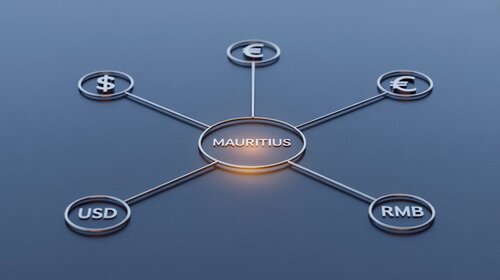
Mauritius hosts a concentration of international and regional banks that provide multi currency corporate accounts in USD, EUR, GBP and other major currencies.
Payments tend to clear faster and compliance processes follow international standards that global counterparties recognise. For Kenyan CEOs who must manage currency volatility in the region, Mauritius offers a safer centre for holding working capital, managing treasury and planning cross border cash flows.
Instead of tying every payment to the Kenyan shilling and local banking constraints, a Mauritius structure allows a business to sit closer to global financial markets while still focusing on African growth.

China connectivity through the renminbi clearing hub
Mauritius has been designated as a renminbi clearing centre for Africa and the local subsidiary of Bank of China acts as the RMB clearing bank. This allows banks and corporates in Mauritius to settle trade, investment and financial transactions directly in Chinese currency without routing everything through the United States dollar.
For Kenyan companies that import from China or seek Chinese finance, using a Mauritius based entity provides direct access to RMB accounts, trade settlement and potentially renminbi funding. This can lower foreign exchange costs, reduce exposure to dollar swings and deepen relationships with Chinese suppliers and lenders.

The preferred structure for private equity and global investors
Mauritius is a preferred jurisdiction for Africa focused private equity and investment funds. Hundreds of funds targeting African assets are domiciled there and many billions of dollars of investment into Africa have been structured through Mauritius vehicles. Fund managers, development finance institutions and institutional investors are familiar with the local company types, regulatory expectations and tax treatment.
When a Kenyan CEO wants to raise growth capital or bring in international partners, a Mauritius holding company often becomes the natural point of entry. Investors usually feel more comfortable subscribing for shares in a Mauritius entity that follows a familiar fund or holding company model with predictable exit options.
Neutral reputation for Africa wide business
A Kenyan company that expands into neighbouring markets sometimes faces political sensitivity or competitive perceptions. A Mauritius holding structure is viewed as neutral. It is seen as an international base rather than a direct competitor from a specific African country. This neutrality can make cross border negotiations easier and help build trust with regulators, partners and customers in new markets.
For regional joint ventures or multi country projects, placing the parent company in Mauritius can remove many of the jurisdictional questions that arise when one African state hosts the legal headquarters for operations spread across several others.
Executive mobility and lifestyle advantages
Mauritius offers straightforward residence options for qualifying investors, professionals and retirees, along with a moderate personal tax regime.
The island provides a safe and stable environment with good infrastructure, schools and healthcare. This makes it easier for Kenyan founders, executives and their families to spend more time in a location where they can focus on strategy, capital raising and regional coordination.
For many Kenyan CEOs, the combination of lifestyle benefits and business efficiency turns Mauritius into a practical base of operations rather than simply a place where a holding company is registered on paper.
Bottom line
Kenyan CEOs use Mauritius as their Africa base because it offers stability, credibility, tax efficiency, strong treaty networks, multi currency banking and direct connectivity to Chinese and global capital.
It does not replace Kenya as a home market. Instead, it provides a trusted platform that makes it easier for Kenyan businesses to grow across the continent and into the world.
Scott Oliver is a retired British writer and independent researcher living in Mauritius. A former Royal Marines Commando and former Wall Street investment professional, he has spent more than four decades living and working internationally across 14 countries. During that time, he worked extensively in international wealth management, cross-border asset protection, international business structuring and global residency planning.
Today, Scott's focus is no longer on managing money or providing professional advice. Instead, through MauritiusWealth.mu, he writes independent educational articles designed to help successful African business owners ask better questions, make better decisions and, when appropriate, identify the right expertise to help protect everything they have spent a lifetime building.
His articles are published solely for general educational and informational purposes and should not be regarded as legal, financial, tax, immigration, investment or other professional advice. Every business owner's circumstances are unique, and readers requiring professional assistance should always consult an appropriately qualified and licensed professional.
Expert Resources
- OECD Investment Policy Reviews: Mauritius
Official OECD review describing how the Mauritius international financial centre and global business companies support cross border investment and treaty based tax planning.
Read the report - Mauritius IFC as a gateway for global investment and trade
Overview of Mauritius as an international financial centre, highlighting its legal framework, double taxation agreements and role as a hub for cross border capital flows.
Read the article - Africa Strategy and private equity funds in the Mauritius IFC
Economic Development Board data showing that hundreds of private equity funds are domiciled in Mauritius and that a large volume of Africa bound investment is structured through the island.
Read the overview - Investment Funds 2025 – Mauritius
Chambers Global Practice Guide explaining why Mauritius is a leading jurisdiction for investment fund structuring and a recognised gateway to Africa.
Read the guide - Mauritius as an IFC of choice for Africa focused funds
Industry commentary outlining why Mauritius remains the most common jurisdiction for Africa focused private equity funds and the advantages it provides to managers and investors.
Read the article - Renminbi Clearing Centre in Mauritius
Announcement and explanation of the renminbi clearing centre established in Mauritius and its role in facilitating Africa–China trade and financial flows.
Read the news report - Official launch of Bank of China (Mauritius) as RMB clearing bank
Government and central bank release confirming Bank of China (Mauritius) Limited as the designated renminbi clearing bank and outlining the benefits for regional businesses.
Read the announcement - The advantages of the Mauritius International Financial Centre
PwC summary of Mauritius as an IFC, including FATF compliance, regulatory strength and investor confidence in the jurisdiction.
Read the summary