

Learning to Do Little After a Lifetime of Doing Everything
For most of my adult life, a normal day meant ten or more hours of work, six days a week. That rhythm continued for half a century.
Productivity was not simply a habit. It was identity. A completed task brought satisfaction. A solved problem brought calm. Being reliable, useful, and capable produced a quiet sense of pride.
If there was an available hour in the day, it felt as though it should be used well.
Even holidays rarely felt like true rest. Working from home for the past twenty-five years blurred whatever boundaries might once have existed. There was always something that could be improved, written, built, fixed, or earned. I admired people who could switch off completely, but I cannot honestly remember a time when I was one of them.
Now, after decades of effort, I find myself trying to learn something that feels unexpectedly difficult: how to do nothing, and enjoy it.

The Conditioning Of A Lifetime
When you work hard for long enough, productivity becomes a reflex. Time begins to feel valuable only when it produces something measurable. Silence can feel unstructured. Stillness can feel vaguely irresponsible. Even when there is no urgent deadline, an internal signal appears: shouldn't you be doing something more useful?
That signal becomes part of the nervous system. It does not vanish just because external pressures ease. After years of output, the absence of output can feel unfamiliar.
I have come to suspect that many people who have spent their lives working hard eventually reach a stage where the challenge is no longer learning how to work. The challenge is learning how to stop.
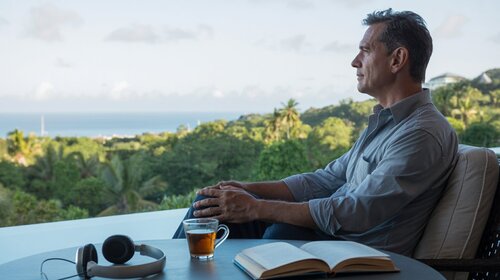
A Gradual Realisation
The idea of il dolce far niente, the sweetness of doing nothing, always appealed to me. In some cultures, people seem able to sit for hours, talk, walk slowly, or simply exist without measuring the moment by productivity. They do not appear lazy. They appear present.
I envied that. I also did not understand how to do it.
The realisation that I had never truly learned to switch off arrived gradually. Circumstances changed. Projects finished. A retirement home was built. Time, at least on paper, became more available. Yet internally, the engine kept running.
Even in beautiful surroundings, sitting quietly outside and watching hummingbirds, there was often a low-level internal alarm: shouldn't you be doing something more productive? Something that generates income? Something useful?
That alarm does not respect scenery. It follows you wherever you go.

The Turning Point
Over the past few years, life changed in ways I could not have anticipated. My son Ian died in 2021. My daughter Catherine died in 2024. Losing both of my children within a short span of time turned my world upside down and inside out and to be perfectly honest, broke me.
When something like that happens, the usual markers of meaning and achievement shift. The drive to keep producing remains, but it begins to feel disconnected from what actually matters. There were moments when sitting quietly and trying to process what had happened felt almost impossible.
Silence did not frighten me. I have always valued silence. Stillness brought thoughts that were not easy to sit with.
Around the same time, my wife and I completed the home we had planned for later life. In theory, it should have been a place to relax. In practice, I discovered that I did not know how to sit outside and simply enjoy the view. There was always a background sense that I should be doing something more useful.
That combination, profound loss and the sudden presence of time, made it clear that learning how to unwind was not optional. It was necessary.
Why Stillness Feels Difficult
I can sit for hours reading a good book, watching the birds in my garden feeding, listening to music, or walking along a beach. But remove even those gentle structures, and after ten minutes the mind begins to push: do something. The silence itself is not the problem. I love silence. What is difficult is the absence of structure and the feeling of being unproductive.
For decades, normal working hours meant all waking hours. That pattern does not disappear simply because circumstances change. It takes time for the nervous system to learn that stillness is not waste.
At sixty-six, I remain physically active and intend to stay strong. Slowing down physically can mean decline if you allow it. But learning to relax mentally is not decline. It is recovery.

Redefining Success
Earlier in life, success meant proving that I could perform better than others. It meant building, achieving, and earning. Now success looks different. It means having enough to live comfortably. It means maintaining health and strength. Most of all, it means peace.
That does not require abandoning discipline or purpose. It requires redefining what a well-used day looks like. A day spent reading, walking, swimming, listening to music, or sitting quietly can be a good day. A long walk along the sea in the late afternoon can be as meaningful as a completed project once was.
This shift is not sudden. It is gradual. But it is real.

Why Learning to Relax Matters After Fifty
For many people over fifty, especially those who have worked hard for decades, there comes a moment when external demands ease but internal momentum does not. The body may be ready to slow down. The mind may not be.
Without deliberate effort, this mismatch can lead to persistent restlessness and a sense that time is being wasted unless it is filled.
Yet genuine rest produces clear benefits.
- Physically, it allows the nervous system to shift out of constant activation. Sleep improves. Recovery improves. Energy stabilises.
- Mentally, clarity improves. Decisions become less reactive. Attention deepens.
- Emotionally, it allows space to process life rather than outrunning it.
- Spiritually, for those inclined to think in those terms, it restores a sense of being rather than constant doing.
Most importantly, it brings peace. And at this stage of life, peace is not a luxury. It is essential.

A Practical Way to Learn How to do Nothing After 50
This ability does not appear automatically. It can be trained.
- Schedule deliberate idleness. Choose a fixed time each day, even ten minutes, where the intention is to do nothing. No phone, no planning. Simply sit or walk without an agenda. Treat this as practice.
- Create quiet environments. Find places where silence is possible. A balcony, a quiet room, a stretch of beach. Return to the same place regularly so the mind associates it with rest.
- Use gentle structure at first. If complete stillness feels impossible, begin with light anchors: listening to music, slow walking, sitting with tea. Gradually reduce structure.
- Expect resistance. The internal alarm will appear. Notice it. Let it pass. The brain is adjusting to a new rhythm.
- Redefine productivity. A rested mind is more effective than an exhausted one. Recovery time is not wasted time.
- Stay physically active. Continue walking, swimming, stretching. Physical strength supports mental calm. The goal is not inactivity. The goal is reduced internal tension.
- Repeat daily. Consistency matters more than duration. Over time, the nervous system learns that stillness is safe.

A Quiet Acceptance
I am still learning this. Some days it comes easily. Other days the old reflex returns. That is normal. A lifetime of effort does not unwind quickly. But it can unwind.
If you have spent decades working hard, proving yourself, and staying useful, you may find yourself in a similar position. You may have built a life that finally allows you to slow down, yet discover that slowing down feels unfamiliar.
You are not alone.
Learning to do nothing is not laziness. It is not decline. It is a skill. It is a discipline. It may be one of the most valuable lessons left to learn after a lifetime of doing everything.
At some point, success is no longer measured by how much you can produce in a day. It is measured by whether you can sit quietly, breathe easily, and feel at peace with where you are.
After fifty years of work, learning how to do nothing, and to enjoy it, may be one of the most important forms of progress still available.
Scott Oliver is a retired British writer and independent researcher living in Mauritius. A former Royal Marines Commando and former Wall Street investment professional, he has spent more than four decades living and working internationally across 14 countries. During that time, he worked extensively in international wealth management, cross-border asset protection, international business structuring and global residency planning.
Today, Scott's focus is no longer on managing money or providing professional advice. Instead, through MauritiusWealth.mu, he writes independent educational articles designed to help successful African business owners ask better questions, make better decisions and, when appropriate, identify the right expertise to help protect everything they have spent a lifetime building.
His articles are published solely for general educational and informational purposes and should not be regarded as legal, financial, tax, immigration, investment or other professional advice. Every business owner's circumstances are unique, and readers requiring professional assistance should always consult an appropriately qualified and licensed professional.