
The Age of Resilience: Why We Need to Stop Fighting the Weather and Start Growing Up
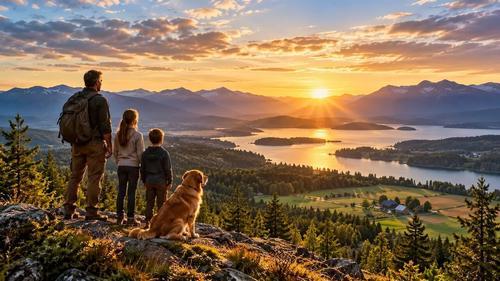
Earth is about 4.54 billion years old. During that almost unimaginable span of time, continents have collided and broken apart, oceans have opened and disappeared, volcanoes have altered the atmosphere, ice has covered enormous areas of the planet and sea levels have risen and fallen by distances that would redraw every modern coastline.
Climate change is not an aberration in Earth's history. Change is Earth's history.
Human civilization, by comparison, occupies the final fraction of a second on the geological clock. Yet we have reached a curious moment in our development. We increasingly speak about the climate as though it were a machine with a thermostat: identify the correct temperature, determine which human activities are moving it away from that setting, adjust taxes, regulations and technologies accordingly, and eventually stabilize the system.
There is sound science behind the proposition that human activity affects climate. Carbon dioxide absorbs infrared radiation. Atmospheric CO₂ concentrations have risen sharply since industrialization, largely because humans have burned fossil fuels and changed land use. The Intergovernmental Panel on Climate Change concludes that human influence has unequivocally warmed the atmosphere, ocean and land.
But accepting that does not require accepting a much larger assumption: that humanity can make the future climate predictable, benign or effectively static.
It cannot.
Even a world that dramatically reduces greenhouse-gas emissions will continue to experience cyclones, droughts, floods, heat waves, changing rainfall, coastal erosion and natural climatic variation. Some changes already set in motion will persist for decades or longer. Climate mitigation may influence the magnitude of future warming, but it cannot abolish weather, geological change or environmental risk.
That distinction matters enormously, particularly for a small island in the Indian Ocean.
Mauritius does not control the global climate. It does, however, control a surprising amount of its vulnerability to it.
That may be where the climate conversation needs to grow up.
We Were Born Into an Unstable World
Modern humans did not evolve in an environmental laboratory with the temperature permanently set at 22 degrees Celsius.
Our ancestors endured enormous climatic changes. Africa experienced repeated shifts between wetter and drier conditions. Landscapes changed. Lakes appeared and disappeared. Vegetation moved. Food sources changed. Human populations migrated.
Our survival depended upon adaptation.
People moved when environments became inhospitable. They learned to control fire, construct shelter, store food, make clothing, cooperate in larger groups and eventually domesticate plants and animals. Much later, humans built irrigation systems, reservoirs, sea walls, drainage networks and cities.
Civilization itself can be understood partly as an enormous exercise in environmental adaptation.
A house is climate adaptation.
So is a storm drain.
So is irrigation.
So is a reservoir.
So is a seawall.
So is an air conditioner.
Human beings became extraordinarily successful not because we found an environment that never changed, but because we became unusually good at surviving change.
That raises an uncomfortable question. Have wealthy modern societies become so accustomed to controlling their immediate surroundings that we have begun confusing environmental management with environmental control?
There is an important difference.
Humanity can influence climate. We can reduce particular risks. We can protect ecosystems and reduce pollution. We can make choices that alter future outcomes.
But we cannot negotiate with a cyclone.
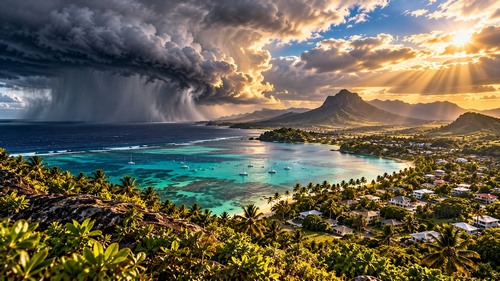
And Mauritius knows something about cyclones.
The View From a Small Island
Mauritius occupies roughly 2,000 square kilometres of land in an ocean covering more than 70 million square kilometres. Its population of around 1.3 million people represents a tiny fraction of humanity, and consequently its contribution to global greenhouse-gas emissions is tiny compared with the world's major industrial economies.
Yet its exposure to environmental disruption is anything but tiny.
The island lies in the southwest Indian Ocean cyclone region. Tropical systems can bring destructive winds, intense rainfall, flooding, storm surge and enormous seas. Mauritius is also dependent on infrastructure concentrated within a relatively small geographic area. Roads, electricity, communications, water systems, ports and food distribution can all be affected by the same extreme event.
Its geography creates another vulnerability. Mauritius imports much of what it consumes.
An island can be thousands of kilometres from a war and still experience its economic consequences through fuel, fertilizer, food, freight and insurance prices. A blocked shipping route, distant conflict, pandemic or supply-chain breakdown can become a Mauritian problem remarkably quickly.
Climate is therefore only one part of a much larger resilience question.
Suppose, for the sake of argument, that every mainstream projection about anthropogenic climate change proves broadly correct. What can Mauritius actually control?
It cannot determine China's energy policy.
It cannot decide how much coal India burns.
It cannot determine America's future transport system or Europe's industrial policy.
But Mauritius can decide whether its drains work.
It can decide whether new buildings are constructed in sensible places and to appropriate standards. It can improve reservoirs and water distribution. It can reduce leakage. It can collect rainwater. It can strengthen electricity networks. It can encourage distributed generation and energy storage. It can protect critical infrastructure and improve emergency planning.
It can examine vulnerable coastlines before permitting another generation of expensive construction immediately beside them.
It can restore natural coastal protection where that makes sense and use engineered protection where engineering is necessary.
It can ask how much food should reasonably be produced locally and how diversified its sources of imported food should be.
These decisions have one tremendous advantage over attempts to predict precisely what the climate will look like in 2050 or 2100.
They work under several different futures.
Call it No-Regrets Resilience.
Preparing for the Future Even When We Get It Wrong
Imagine that rainfall becomes more erratic over coming decades. Additional water storage is useful.
Now imagine that the climate models overestimated the change. The additional water storage is still useful.
Imagine that extreme rainfall becomes more frequent. Better drains are useful.
Imagine that it doesn't. Mauritius still experiences heavy tropical rain, so better drains remain useful.
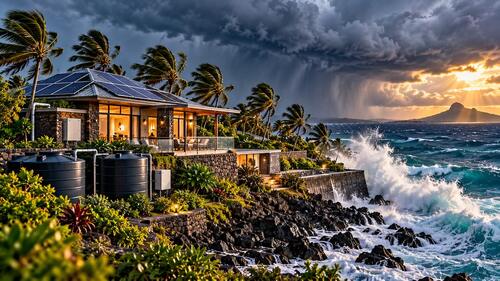
Imagine that stronger cyclones become a greater threat. More resilient buildings, protected infrastructure, emergency electricity supplies and better communications are valuable.
Imagine cyclone behaviour changes less than expected. Those investments still protect people from the cyclones Mauritius already experiences.
The same logic applies far beyond climate.
A local microgrid with battery storage may keep essential services functioning after a cyclone, but it could also help during an ordinary grid failure.
A stronger local agricultural sector may provide protection during drought, but it can also provide protection against shipping disruption, war or another pandemic.
Water recycling can provide insurance against changing rainfall while simultaneously reducing pressure on existing water supplies.
This is the crucial difference between prediction and resilience.
Prediction asks: What exactly is going to happen?
Resilience asks: What can we build today that remains useful across several plausible futures?
The second question is often much easier to answer.
The Forgotten Cost of Efficiency
There is a broader lesson here.
During the past several decades, the global economy became astonishingly efficient.
Factories learned to operate with minimal inventory. Companies sourced components from whichever country could produce them most cheaply. Supermarkets relied on elaborate logistics networks capable of moving food thousands of kilometres with extraordinary precision. Electricity came from centralized grids. Financial institutions became interconnected across continents.
The philosophy was simple: eliminate waste, reduce redundancy and maximize efficiency.
Then the world discovered that redundancy is not always waste.
COVID-19 provided a brutal demonstration. Factories thousands of kilometres away stopped producing components, and assembly lines elsewhere stopped with them. Containers accumulated in the wrong ports. Medical equipment became scarce. Semiconductor shortages disrupted industries ranging from automobiles to electronics.
Russia's invasion of Ukraine offered another lesson. Energy and agricultural markets thousands of kilometres from the battlefield were shaken because modern economies are deeply interconnected.
The lesson was not that globalization had failed. Global trade has created enormous prosperity.
The lesson was that efficiency and resilience are not the same thing.
Efficiency asks how little spare capacity we can get away with.
Resilience asks how much spare capacity we may someday be grateful to have.
A society optimized entirely for efficiency can work beautifully—right up until something breaks.
Water May Be Mauritius's Most Important Example
Nothing illustrates the principle better than water.
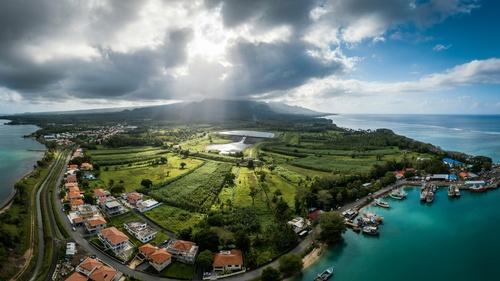
Mauritius receives substantial rainfall by the standards of many countries, but rainfall alone does not guarantee water security. Water must fall in the right places, be captured, stored, treated and delivered when people need it. Seasonal variation matters. Geography matters. Leakage matters. Reservoir capacity matters.
An island can therefore receive heavy tropical rainfall and still experience water shortages.
The traditional response is often to ask whether next year will be wetter or drier.
The resilience question is different.
Why should either outcome create a crisis?
More storage creates a buffer. Better distribution reduces waste. Rainwater harvesting reduces demand on centralized supplies. Wastewater treatment and reuse can create another usable resource. Desalination remains energy-intensive and comparatively expensive, but technological improvements continue to make it an increasingly credible insurance policy for water-stressed coastal societies.
Mauritius is surrounded by approximately 1.3 billion cubic kilometres of seawater. The problem is not the physical absence of water. It is obtaining fresh water at an acceptable economic and environmental cost.
That is an engineering problem.
Engineering problems can be worked on.
Food Is Another Form of Insurance
The same thinking applies to food.
Complete food independence would make little economic sense for Mauritius. The island has limited land, and international trade allows Mauritians to consume products that would be inefficient or impossible to produce locally.
But there is a vast difference between self-sufficiency and resilience.
A resilient food system might combine imports from multiple countries, strategic reserves, stronger local production and technologies capable of producing more food using less land and water.
Controlled-environment agriculture, hydroponics, improved irrigation, drought-resistant crops and precision agriculture will not make Mauritius independent of the outside world.
They don't need to.
Resilience isn't isolation.
It is avoiding catastrophic dependence on a single system.
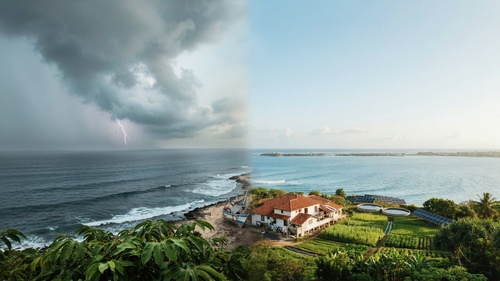
Somebody Has to Build All This
There is an investment story hidden inside this change in thinking.
Climate discussions are often framed almost entirely around sacrifice: consume less, emit less, travel less, build less.
Resilience presents another side of the equation.
Somebody has to manufacture better drainage systems.
Somebody has to build stronger homes.
Somebody has to develop improved construction materials, water-treatment technologies, batteries, pumps, sensors, irrigation systems and storm-resistant communications infrastructure.
Somebody has to build microgrids.
Somebody has to develop crops capable of producing reliable yields with less water.
Somebody has to detect leaks in municipal water systems.
Somebody has to engineer coastal protection.
If governments, companies and households increasingly decide that resilience is worth paying for, capital will follow.
That does not require an investor to know precisely how much warmer the planet will be in 2075.
The investment thesis can be much simpler.
Human beings will continue needing water, food, electricity, shelter and functioning infrastructure under almost every conceivable climate scenario.
Companies that help provide those necessities more reliably have something valuable to sell.
We Cannot Control Everything
There is a strange psychological comfort in believing that every major problem has a global solution.
Hold enough conferences. Sign enough agreements. Pass enough legislation. Raise enough money. Create enough targets.
Eventually the problem will be solved.
Reality is usually less cooperative.
The Earth's climate system contains interactions between oceans, clouds, ice, vegetation, atmospheric chemistry, solar energy and countless feedback mechanisms operating across enormous differences in time and scale. Human civilization adds another layer of complexity involving economics, politics, technology and the behaviour of billions of people.
We should continue trying to understand it.
We should reduce unnecessary pollution. We should protect forests and oceans. We should develop cleaner technologies when they provide genuine environmental and economic advantages. If emissions reductions can lower future climate risks at acceptable cost, that is a legitimate objective.
But none of those things removes the need to adapt.
Mitigation and adaptation are not opposites.
The mistake is treating adaptation as an admission of defeat.
It may be exactly the opposite.
Adaptation is an expression of confidence in human ingenuity.
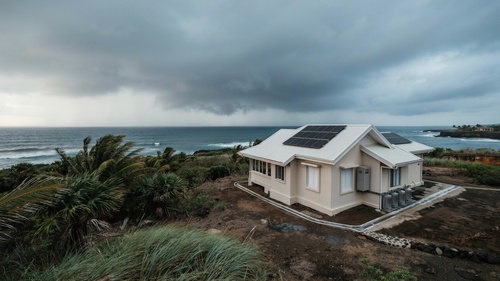
The Age of Resilience
Perhaps the next great shift in thinking will be away from our obsession with predicting exactly what will happen and toward preparing intelligently for whatever happens.
That principle reaches far beyond climate.
Build an electricity system that survives when part of the grid fails.
Build a food system that survives when one supplier disappears.
Build a water system that survives a dry year.
Build houses that survive violent weather.
Build businesses that survive recessions.
Build financial systems that survive shocks.
Build communities in which people still know how to help one another when sophisticated systems stop working.
We cannot know whether the next great disruption will come from the atmosphere, an ocean, a virus, a war, a financial crisis, a computer network or something nobody has thought seriously about yet.
But we can decide how fragile we want to be when it arrives.
That may ultimately be the most important lesson of climate change.
Not that human beings are powerless.
And not that human beings are powerful enough to control everything.
But that we are extraordinarily adaptable creatures living on an extraordinarily dynamic planet.
Our ancestors understood this because they had no alternative.
Perhaps modern civilization needs to remember it.
Build the stronger house. Improve the drains. Store the water. Protect the coastline intelligently. Diversify the food supply. Create backup power. Plant something. Maintain some redundancy.
And after doing what can reasonably be done, live.
Share a good meal with friends. Walk along the coast while the weather is beautiful. Appreciate the extraordinary accident of being alive on a small green island in the middle of an immense blue ocean.
The planet will continue changing long after we are gone.
Our task is not to make Earth stand still.
It is to become exceptionally good at living on it.
Scott Oliver is a retired British writer and independent researcher living in Mauritius. A former Royal Marines Commando and former Wall Street investment professional, he has spent more than four decades living and working internationally across 14 countries. During that time, he worked extensively in international wealth management, cross-border asset protection, international business structuring and global residency planning.
Today, through MauritiusWealth.mu, Scott writes independent educational articles designed to help successful African business owners ask better questions, make better decisions and, when appropriate, identify the right expertise to help protect everything they have spent a lifetime building.
His articles are published solely for general educational and informational purposes and should not be regarded as legal, financial, tax, immigration, investment or other professional advice. Every business owner's circumstances are unique, and readers requiring professional assistance should always consult an appropriately qualified and licensed professional.