
Understand His Mentor and You Understand Donald Trump's 3 Rules for Fighting
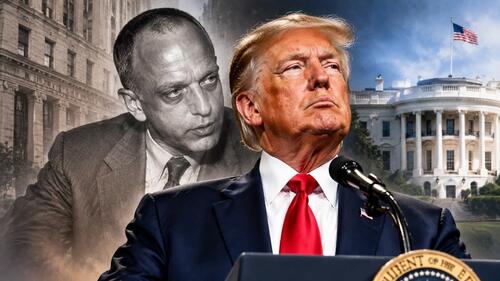
I lived in New York City from 1985 until 1996 and worked on Wall Street from 1987 until 1996, so during those years it was virtually impossible not to know who Donald Trump was.
He was constantly in the news. Real estate deals, casinos, marriages, divorces, lawsuits, financial problems, extravagant claims and, invariably, Donald Trump talking about Donald Trump.
I didn't know him personally, but I watched the public Donald Trump during the years when I was working in finance in New York, long before he became President of the United States.
Looking back almost 40 years, one thing about him seems remarkably consistent. When Donald Trump believes he is being attacked, he fights. He attacks his attackers, rarely concedes wrongdoing and, whatever the eventual outcome, has an extraordinary ability to present himself as the winner.
For years, I assumed that was simply Donald Trump.
Then I started looking more closely at the man who advised him when he was a young New York property developer.
His name was Roy Cohn.
And if you want to understand Donald Trump's approach to conflict, Roy Cohn is an excellent place to start.
Who Was Roy Cohn?
Roy Cohn was already one of America's most controversial attorneys long before he met Trump. He had worked on the espionage prosecution of Julius and Ethel Rosenberg and subsequently became chief counsel to Senator Joseph McCarthy during the anti-communist investigations of the 1950s.
By the 1970s, Cohn had reinvented himself as a powerful New York attorney and political fixer with connections across business, politics and the media.
Then, in 1973, he met 27-year-old Donald Trump.
The U.S. Justice Department had sued Trump, his father Fred and their company, alleging racial discrimination in the rental of apartments. Cohn became Trump's attorney and advised him to fight.
And they didn't merely defend themselves. Trump and Cohn counterattacked by suing the federal government for $100 million.
The countersuit was unsuccessful. The original case eventually ended with a 1975 consent decree requiring the Trump organization to change aspects of its rental practices and take measures intended to provide greater access to minority tenants. Importantly, the settlement contained no admission of guilt.
Cohn and Trump nevertheless presented the outcome publicly as a victory.
Cohn would remain Trump's attorney and adviser for more than a decade. Numerous biographical accounts have described him as an important early mentor to Trump, although Trump himself has disputed the word "mentor."
Whatever terminology you prefer, Cohn's influence is particularly interesting because his approach to conflict can essentially be reduced to three remarkably simple rules.
Roy Cohn's Three Rules for Fighting
- Rule One: Attack, attack, attack. When somebody attacks you, don't retreat into a defensive position. Counterattack. If necessary, turn the accuser into the accused.
- Rule Two: Admit nothing. Deny everything. Don't unnecessarily concede your opponent's premise. Don't give them an admission they can subsequently use against you. Keep fighting.
- Rule Three: Whatever happens, claim victory and never admit defeat. A legal, political or negotiating result doesn't automatically determine how the public will interpret what happened. Define the result yourself and get your version of events into the public arena quickly, forcefully and repeatedly.
Put together, the philosophy is remarkably simple: when attacked, counterattack; when accused, concede as little as possible; and when the result arrives, don't allow your opponent to define what happened.
Once you understand that framework, many episodes from Trump's subsequent career become considerably easier to understand.
The Rules Follow Trump to Washington
Consider the Mueller investigation during Trump's first presidency. Trump didn't merely contest the allegations. He repeatedly attacked the investigation itself, calling it a "witch hunt," while categorically denying collusion between his campaign and Russia.
There is an important factual distinction here. Special Counsel Robert Mueller's investigation did not establish that members of the Trump campaign conspired or coordinated with the Russian government in its election-interference activities. Trump therefore had substantial grounds for claiming vindication on that particular allegation. On obstruction, however, Mueller did not reach a traditional prosecutorial conclusion and specifically wrote that his report did not exonerate Trump.
Trump compressed that complicated result into a much simpler message: "No Collusion, No Obstruction, Complete and Total EXONERATION."
Then came Trump's first impeachment over his dealings with Ukraine. Trump attacked the investigation and his political opponents while repeatedly describing his telephone conversation with Ukrainian President Volodymyr Zelensky as a "perfect call." The House impeached him, the Senate subsequently acquitted him, and Trump celebrated what he called "total acquittal." In this instance the victory claim rested on an indisputable fact: the Senate really had acquitted him.
Then came the 2020 presidential election.
Before all the votes had been counted, Trump declared: "Frankly, we did win this election."
Joe Biden ultimately won the certified election and the Electoral College. Trump and his allies pursued numerous legal challenges, but those efforts did not overturn the result. Trump nevertheless continued maintaining that he had won.
Fifty years after meeting Cohn, Trump's response to perhaps the biggest defeat of his life bore an extraordinary resemblance to Cohn's third rule: never allow defeat to become your public narrative.
"Where's My Roy Cohn?"
Perhaps one of the most revealing moments came during Trump's first presidency when Attorney General Jeff Sessions recused himself from overseeing the investigation into Russian interference in the 2016 election.
According to multiple reports, an angry Trump demanded: "Where's my Roy Cohn?"
Cohn had been dead for more than 30 years, yet Trump was still invoking his name when he wanted someone he believed would fight aggressively and loyally on his behalf.
Trump obviously doesn't need another mentor today. He has spent more than half a century fighting business competitors, banks, journalists, regulators, prosecutors and political opponents.
But there is someone in Trump's present circle whose reported legal instincts bear an interesting resemblance to Cohn's: Boris Epshteyn.
Epshteyn has become an important personal lawyer and confidant to Trump. Reporting about Trump's legal team describes an aggressive strategy of fighting cases, minimizing compromise and pursuing legal battles that some other advisers considered extremely risky.
The distinction is important.
Roy Cohn taught Trump the playbook. Boris Epshteyn appears to help him run it.
And Now the Cohn Rules Go to War
Which brings us to Iran.
I'm not suggesting that Roy Cohn, who died in 1986, somehow determines American foreign policy in 2026. Nor can we know whether Trump consciously thinks about Cohn when making military decisions.
But we can examine Trump's public communications surrounding the Iran war and ask whether the same three-part pattern is visible.
The United States and Israel began their major military campaign against Iran on February 28, 2026. Trump framed American strategy in overwhelmingly offensive terms. Iranian military and nuclear capabilities were attacked on a massive scale, while Trump repeatedly threatened further destruction if Iran did not comply with American demands.
The first Cohn principle is certainly recognizable: when confronted by a threat, seize the offensive.
But the second and third rules become more interesting when we examine Trump's descriptions of the war.
The United States has unquestionably inflicted enormous military damage on Iran, so it would be unreasonable to portray Trump's claims of American military success as imaginary.
But Trump has also repeatedly resisted interpreting unresolved objectives or continuing Iranian resistance as evidence that his strategy has failed.
In March, Trump said: "I think we won."
In April, following a ceasefire announcement, he declared: "Total and complete victory. 100 percent. No question about it."
But the conflict wasn't over. It still isn't.
Subsequent months brought further military operations, negotiations, threats and renewed hostilities.
By August, Trump was again saying: "I think it's going to end really soon."
On October 1, he said Iran was "ready to fold up."
And on October 16, Trump was discussing the possibility that the United States might still have to attack Iran's deeply buried Pickaxe Mountain nuclear facility.
None of this means America hasn't achieved any military successes. It plainly has.
But there is an important distinction between winning battles, severely damaging an opponent's military capabilities and achieving the strategic objectives necessary to end a war.
And that raises a fascinating question.
Can the Roy Cohn Strategy Work in a War?
Roy Cohn's philosophy makes intuitive sense as a strategy for litigation, negotiation, publicity and perhaps even politics.
If somebody attacks you, hit them harder. If you're accused of something, don't volunteer admissions. And if the outcome is ambiguous, don't stand quietly while your opponent tells the world that you lost.
There is considerable psychological power in that approach.
But warfare introduces something that a New York courtroom, business negotiation or television interview does not.
The other side has an army.
You can declare victory in a lawsuit and continue arguing about what the settlement really meant. You can lose an election and continue telling supporters that you actually won. You can emerge from a difficult negotiation and tell shareholders that you obtained an excellent deal.
But declaring victory in a war doesn't make the enemy stop fighting.
Iran gets a vote.
Perhaps Trump's aggressive strategy will ultimately force Iran into an agreement acceptable to the United States.
Perhaps it won't.
We don't yet know.
But declaring victory and achieving a durable strategic victory are two different things.

Why Investment Advisors Should Understand This
There is another reason I find this story fascinating after spending so many years in finance.
Investment advisors spend their careers listening to confident people explain what happened, why it happened and what is going to happen next.
CEOs do it. Fund managers do it. Politicians do it. Economists do it. Clients do it. And occasionally we do it ourselves.
One of the most valuable professional skills an investment advisor can develop is the ability to distinguish between what actually happened and how somebody is framing what happened.
Those aren't necessarily the same thing.
A CEO can call disappointing earnings "a transformational quarter." A fund manager can describe underperformance as "temporary dislocation." A politician can call an inconclusive outcome a historic victory.
Sometimes they're right.
Sometimes they're simply putting the best possible interpretation on uncomfortable facts.
The intelligent observer learns to separate the event from the narrative surrounding the event.
That, perhaps, is the most useful lesson in the entire Roy Cohn story.
Understand the Mentor and You Understand the Fighting Style
Roy Cohn doesn't explain Donald Trump. No single person could.
Trump was influenced by his father, New York real estate, decades of business negotiations and litigation, television, politics and undoubtedly his own personality.
But if you want to understand Donald Trump's instinctive response when he believes he is being attacked, accused, cornered or defeated, understanding Roy Cohn is an excellent place to start.
I thought I understood Donald Trump because I'd been watching him since I lived in New York in the 1980s.
It turns out I should have been paying more attention to his lawyer.
Because almost 40 years after Roy Cohn died, the three rules associated with his approach remain remarkably useful for understanding how Donald Trump fights:
Attack rather than retreat.
Admit nothing you don't have to admit.
And never allow your opponent to decide what the world should call a victory or a defeat.
Roy Cohn died in 1986. His most famous student has been applying variations of that philosophy ever since.
And today the stakes are considerably higher than a New York real estate lawsuit.
Scott Oliver is a retired British writer and independent researcher living in Mauritius. A former Royal Marines Commando and former Wall Street investment professional, he has spent more than four decades living and working internationally across 14 countries. During that time, he worked extensively in international wealth management, cross-border asset protection, international business structuring and global residency planning.
Today, through MauritiusWealth.mu, Scott writes independent educational articles designed to help successful African business owners ask better questions, make better decisions and, when appropriate, identify the right expertise to help protect everything they have spent a lifetime building.
His articles are published solely for general educational and informational purposes and should not be regarded as legal, financial, tax, immigration, investment or other professional advice. Every business owner's circumstances are unique, and readers requiring professional assistance should always consult an appropriately qualified and licensed professional.