
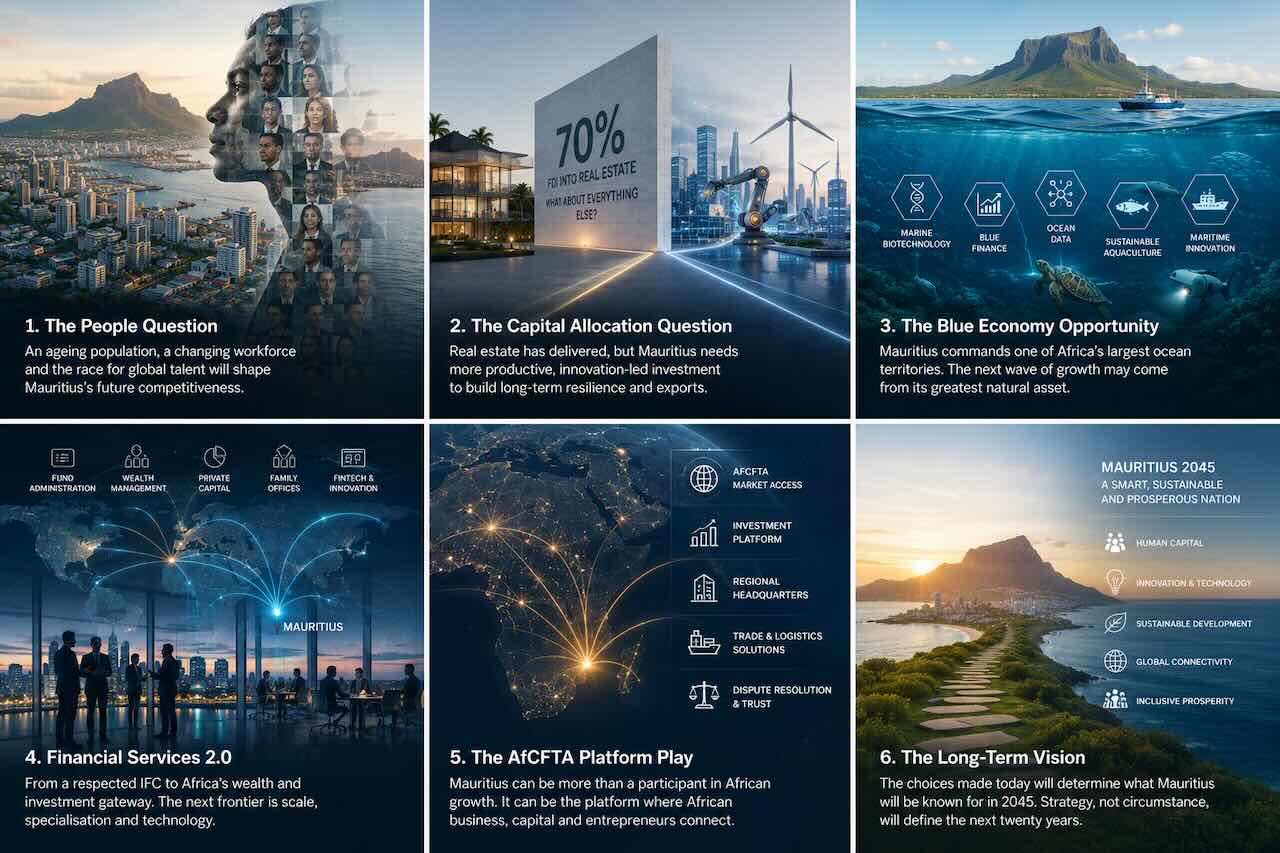
What Is Missing From The Mauritius Budget? Six Strategic Questions That Could Shape Mauritius’s Next Twenty Years
Budget speeches are often judged by what they announce.
Tax measures are scrutinised. Infrastructure projects are catalogued. Social programmes are assessed. Business groups evaluate incentives and economists debate fiscal projections. For a brief period, public attention focuses intensely on the details before gradually moving on to the next news cycle.
Yet the true significance of a budget often lies elsewhere.
Beyond the individual measures, budgets reveal how a nation understands itself. They provide insight into the priorities of policymakers, the challenges they perceive and the opportunities they believe are worth pursuing. Most importantly, they offer clues about the future a country is attempting to build.
Viewed through that lens, the Mauritius Budget 2026/27 is a thoughtful and largely prudent document. It seeks to reduce fiscal pressures, improve public infrastructure, support vulnerable households, modernise parts of the economy and create a more efficient environment for business. It continues a process of fiscal consolidation while attempting to avoid unnecessary damage to growth. Few serious observers would dispute the importance of these objectives.
At the same time, the budget raises a deeper question that extends beyond any individual policy announcement.
What exactly is Mauritius seeking to become over the next twenty years?
This question matters because the global environment in which Mauritius operates is changing rapidly. Demographic shifts are reshaping labour markets across much of the world. Artificial intelligence is beginning to alter entire industries. Capital is becoming increasingly mobile. Africa is moving, albeit unevenly, towards greater economic integration. New opportunities are emerging within the blue economy, digital services and cross-border financial activities. Competition between jurisdictions is intensifying as governments seek to attract investment, talent and entrepreneurs.
Against this backdrop, stability remains important, but stability alone is rarely sufficient. Nations that prosper over long periods typically combine prudent management of current challenges with a clear vision of future opportunity. They identify structural trends before they become obvious. They position themselves where capital, talent and technology are likely to move rather than where they have been in the past.
The Mauritius Budget contains many sensible responses to today's challenges. The more interesting question is whether the broader national conversation is paying sufficient attention to tomorrow's opportunities.
Six strategic questions stand out.
None of them can be answered by a single budget. Yet each has the potential to influence the country's economic trajectory long after the details of this year's fiscal measures have been forgotten.
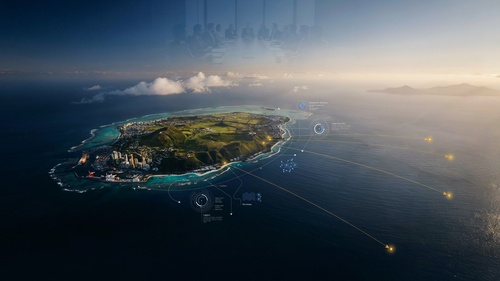
1. Who Will Power The Mauritian Economy In Twenty Years?
Much of the public discussion surrounding the budget has focused on pensions. This is understandable. Pension reform affects a large number of citizens and carries significant political and social implications. However, viewed through a longer-term lens, pensions are not the fundamental issue. They are one of the visible consequences of a much larger demographic transition.
Like many middle-income economies that have experienced decades of rising prosperity, Mauritius is confronting the combined effects of lower fertility rates, increasing life expectancy and an ageing population. These changes occur gradually and therefore rarely generate the sense of urgency associated with financial crises or political events. Their significance lies not in their speed but in their cumulative impact.
An ageing population influences almost every aspect of economic performance. Labour force growth slows. Healthcare expenditure rises. Pension obligations increase. Productivity becomes more important. Competition for skilled workers intensifies. Governments face growing pressure to maintain social services while preserving fiscal sustainability.
The EY Budget Synopsis highlights another important trend. Workforce growth has increasingly been supported by foreign labour, with the number of foreign workers rising significantly in recent years. At the same time, productivity growth has shown signs of deceleration.
This raises a series of strategic questions that extend well beyond the current budget cycle.
Will Mauritius increasingly rely on imported talent to support economic growth?
Can higher levels of automation and artificial intelligence compensate for demographic pressures?
How should the country position itself to attract entrepreneurs, researchers and highly skilled professionals from across Africa and beyond?
What role should the Mauritian diaspora play in national development?
These questions become particularly important when viewed in the context of global competition for talent. Across Europe, Asia and North America, governments are already competing aggressively to attract skilled individuals capable of contributing to knowledge-based industries. The countries that succeed are often those that combine economic opportunity with quality of life, political stability and regulatory predictability.
Mauritius possesses many of these attributes. The challenge lies in transforming them into a coherent long-term strategy.
A useful way to frame the issue is this: the debate should not simply be about how many workers Mauritius will need in twenty years. It should be about what type of workforce the country hopes to develop. A jurisdiction seeking to become a leading centre for financial services, technology, investment management and high-value professional services requires a very different talent strategy from one focused primarily on labour-intensive sectors.
Demographics are therefore not merely a social issue. They are a strategic issue. The future competitiveness of Mauritius may depend as much on its ability to attract, develop and retain talent as on any tax incentive or infrastructure project announced in a budget speech.
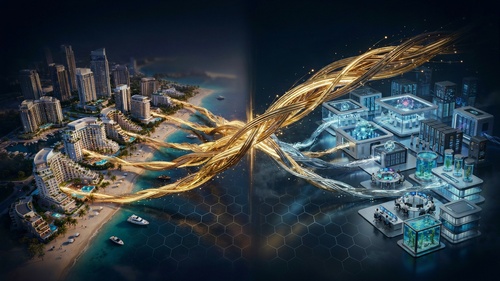
2. Why Is Most Foreign Investment Still Flowing Into Real Estate?
Few sectors have contributed more visibly to the Mauritian economy over the past two decades than real estate.
From luxury villas and integrated resort schemes to retirement developments and premium residential communities, foreign investment has helped reshape parts of the island while generating employment, government revenue and significant economic activity. Property development has become one of the most recognisable expressions of Mauritius's success in attracting international capital.
Yet success can sometimes obscure a more important question.
According to the EY Budget Synopsis, approximately seventy percent of foreign direct investment continues to flow into real estate.
That statistic deserves closer examination because foreign investment does more than finance projects. It reveals how investors perceive opportunity.
When the overwhelming majority of incoming capital is directed towards one sector, it becomes reasonable to ask whether other strategically important sectors are attracting sufficient attention.
This is not an argument against property investment. Real estate has played an important role in economic development and will likely continue to do so. The question is whether Mauritius wishes to remain primarily a destination for property capital or evolve into a destination for productive capital.
The distinction matters.
Productive capital tends to create export earnings, intellectual property, technology transfer, specialised employment and long-term productivity gains. It often flows into industries capable of scaling beyond domestic markets. Over time, these sectors become engines of economic resilience because they generate value independently of domestic consumption and land availability.
Property development, by contrast, is constrained by geography. Land is finite. The economic benefits are real, but they do not necessarily compound in the same manner as technology, financial services, advanced manufacturing or research-intensive industries.
The strategic question therefore becomes one of capital allocation.
If Mauritius is seeking to strengthen its long-term competitiveness, how can it encourage a greater proportion of investment into sectors capable of generating high-value exports, innovation and regional influence?
The answer may lie not in reducing support for real estate, but in creating equally compelling reasons for capital to flow elsewhere.
This is where the conversation begins to move towards opportunities that are still underappreciated.
One of them lies beyond the shoreline.
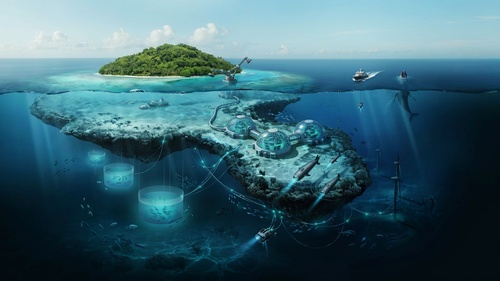
3. Is Mauritius Still Thinking Like A Small Island?
Most discussions about Mauritius begin with the same observation.
It is a small island nation.
Geographically, that is true.
Strategically, it may be profoundly misleading.
Mauritius occupies approximately 2,000 square kilometres of land. Yet through its Exclusive Economic Zone, it exercises rights over approximately 2.3 million square kilometres of ocean, an area larger than many countries and one of the largest maritime zones in Africa.
The implications of this reality have not yet fully entered the national conversation.
Historically, the ocean has been viewed primarily through the lenses of tourism, fisheries and shipping. Those sectors remain important. However, the global blue economy is evolving rapidly and increasingly encompasses activities that would have been considered science fiction only a generation ago.
Marine biotechnology is emerging as a source of pharmaceutical and industrial innovation.
Aquaculture is becoming an increasingly important contributor to global food security.
Ocean data is acquiring strategic value in areas ranging from climate science to logistics and maritime security.
New technologies are transforming marine research, seabed mapping and environmental monitoring.
Meanwhile, blue finance is beginning to attract serious institutional capital as investors seek opportunities linked to sustainability, conservation and ocean-based economic development.
The budget contains welcome measures relating to aquaculture, fisheries and ocean research infrastructure. These are encouraging developments.
The larger question, however, concerns ambition.
Does Mauritius see the blue economy as a supplementary sector, or as a potential pillar of national competitiveness?
This distinction is important because the countries that ultimately lead emerging industries are rarely those that participate first. They are often those that recognise the opportunity earliest and build ecosystems around it.
For Mauritius, the blue economy may represent something more than another sector.
It may represent a strategic advantage that relatively few countries can replicate.
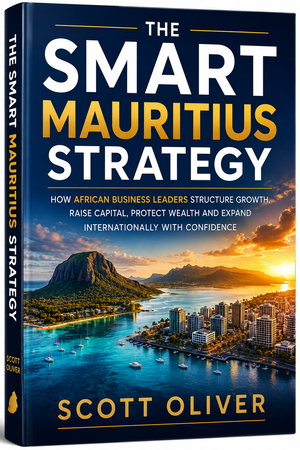
Free Chapter
The SMART Mauritius Strategy
Discover how African business leaders use smarter structures to raise capital, protect wealth and expand internationally.
Download Now4. What Is The Future Of Mauritian Financial Services?
If the blue economy represents an underdeveloped opportunity, financial services represent an established strength.
For decades, financial services have been one of the sectors through which Mauritius has exercised influence far beyond what might normally be expected from a country of its size.
The sector has attracted international investment, facilitated cross-border transactions and helped position Mauritius as a respected jurisdiction for business and investment activity.
The budget proposes several legislative reforms aimed at strengthening and modernising the financial system. These include updates to banking legislation and the broader regulatory framework.
Such reforms are important.
Yet they address only part of the strategic challenge.
The more important question concerns positioning.
- As Africa's economies continue to grow and integrate, where will the continent's capital be managed?
- Where will family offices establish regional structures?
- Where will private investment funds be administered?
- Where will entrepreneurs, investors and business owners seek sophisticated cross-border solutions?
These questions are becoming increasingly important because Africa's economic story is evolving. A growing number of African companies are expanding regionally. Family-owned businesses are becoming more sophisticated. Institutional investors are increasing their exposure to African opportunities. Entrepreneurial wealth is growing across multiple markets.
Each of these trends creates demand for financial infrastructure.
Mauritius already possesses many of the ingredients required to serve this demand. Political stability, legal certainty, professional expertise and international connectivity provide a foundation that many competing jurisdictions would envy.
The challenge is no longer whether Mauritius can participate.
The challenge is whether Mauritius can lead.
A vision focused solely on preserving existing strengths may prove insufficient in a world where financial services are being reshaped by technology, private capital and global competition.
The opportunity may not lie in defending yesterday's position.
It may lie in defining tomorrow's.

5. How Can Mauritius Position Itself At The Centre Of African Growth?
One of the most significant economic developments of the coming decades may not occur in Europe, North America or Asia.
It may occur in Africa.
The African Continental Free Trade Area represents an ambitious attempt to deepen economic integration across a continent that is expected to account for a growing share of global population growth, urbanisation and consumer demand during the decades ahead.
Progress will not be uniform. Challenges will remain considerable.
Nevertheless, the direction of travel appears clear.
African economies are becoming increasingly interconnected.
For Mauritius, this trend raises an intriguing possibility.
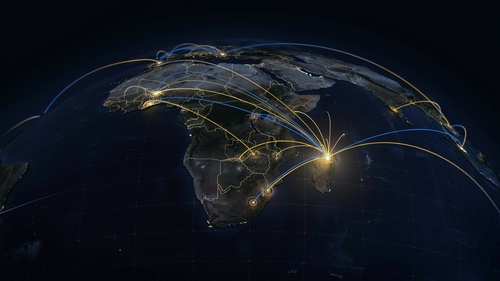
Rather than viewing itself primarily as an island economy, could it position itself as a strategic platform through which African growth is financed, structured and supported?
This is a fundamentally different way of thinking about national competitiveness.
The question is not simply how Mauritius can trade more with Africa.
The question is how Mauritius can become indispensable to Africa's economic development.
- Regional headquarters.
- Investment platforms.
- Family offices.
- Fund administration.
- Professional services.
- Cross-border structuring.
- Capital raising.
- Dispute resolution.
These are all activities that tend to cluster in jurisdictions capable of combining credibility, expertise and predictability.
Mauritius possesses many of these characteristics already.
What remains uncertain is whether they are being assembled into a sufficiently ambitious long-term strategy.
The countries that benefit most from economic integration are often not those with the largest populations or the largest natural resources.
They are the countries that position themselves at the intersections where capital, talent and ideas converge.
Mauritius has an opportunity to become one of those intersections.
6. What Will Be Mauritius's Next Great Economic Engine?
Ultimately, all of these questions lead towards a single conclusion.
Every successful economy eventually reaches a point where managing existing industries is no longer enough.
At some stage, the focus shifts towards identifying the industries that will define the next chapter of national development.
For Mauritius, that moment may be approaching.
The budget contains initiatives across multiple sectors.
- Artificial intelligence.
- Financial services.
- Manufacturing.
- Tourism.
- Agriculture.
- Renewable energy.
- Infrastructure.
- Blue economy activities.
Each contributes something valuable.
Yet a broader question remains unresolved.
Which of these sectors has the potential to become the defining growth engine of the next twenty years?
History suggests that countries rarely achieve exceptional economic performance by spreading equal emphasis across every opportunity.
They succeed by identifying areas where their advantages are genuinely distinctive and then investing consistently over long periods.
The challenge for Mauritius is therefore not a shortage of opportunities.
It is prioritisation.
The country possesses a unique combination of political stability, international connectivity, financial expertise, strategic geography and ocean resources.
The question is how these assets will be combined to create the next phase of growth.
Conclusion: Managing The Present And Building The Future
The Mauritius Budget 2026/27 is, by most measures, a thoughtful and responsible document. It addresses fiscal pressures, supports households, invests in infrastructure and seeks to improve the business environment. In many respects, it reflects the priorities of a government attempting to balance competing demands while maintaining economic stability.
Yet stability is not the same as strategy.
The most important questions facing Mauritius cannot be answered through a single budget cycle because they concern forces that will unfold over decades rather than years.
How will the country respond to demographic change?
How can capital be directed towards sectors that generate long-term productive capacity?
What role should the blue economy play in national development?
How can Mauritius strengthen its position as a financial centre?
How can it leverage African integration and economic growth?
And perhaps most importantly, what industry or combination of industries will define Mauritius's economic identity in 2045?
These are not questions of ideology.
They are questions of positioning.
The nations that prosper most successfully over long periods are rarely those that simply react to events as they occur. They are the nations that recognise structural trends early, align public and private investment around emerging opportunities and gradually build advantages that become difficult for others to replicate.
Mauritius has already achieved something remarkable. It has built one of Africa's most stable, respected and internationally connected economies.
The challenge now is not preserving that achievement.
The challenge is determining what comes next.
Because the most consequential economic debate in Mauritius is unlikely to be about the details of this year's budget.
It is about the future the country wishes to build over the next twenty years.
Scott Oliver is a retired British writer and independent researcher living in Mauritius. A former Royal Marines Commando and former Wall Street investment professional, he has spent more than four decades living and working internationally across 14 countries. During that time, he worked extensively in international wealth management, cross-border asset protection, international business structuring and global residency planning.
Today, Scott's focus is no longer on managing money or providing professional advice. Instead, through MauritiusWealth.mu, he writes independent educational articles designed to help successful African business owners ask better questions, make better decisions and, when appropriate, identify the right expertise to help protect everything they have spent a lifetime building.
His articles are published solely for general educational and informational purposes and should not be regarded as legal, financial, tax, immigration, investment or other professional advice. Every business owner's circumstances are unique, and readers requiring professional assistance should always consult an appropriately qualified and licensed professional.
Expert Resources
- Mauritius Budget 2026/27
The official budget speech provides the primary source for the Government's fiscal priorities, sector measures and public investment commitments. Read the official Mauritius Budget Speech 2026/27 - Statistics Mauritius Population and Vital Statistics
Official demographic data covering population estimates, births, deaths, ageing trends and population projections. Review Mauritius population and vital statistics - IMF 2025 Article IV Consultation on Mauritius
Independent macroeconomic analysis covering growth, fiscal policy, inflation, external balances and medium-term economic risks. Read the IMF Mauritius Article IV Consultation - Economic Development Board Blue Economy Overview
Official investment information on Mauritius's ocean economy, including marine resources, maritime activities and blue economy opportunities. Explore Mauritius blue economy opportunities - Bank of Mauritius Financial Stability Reports
Central bank analysis of domestic and international macro-financial developments, banking-sector resilience and financial-system risks. Access Bank of Mauritius financial stability reports - Financial Services Commission Annual Statistical Bulletin
Official data on Mauritius's non-bank financial services sector, global business activity, regulated entities and sector performance. Review the FSC Annual Statistical Bulletin - Mauritius AfCFTA Strategy
Strategic analysis of how Mauritius can leverage the African Continental Free Trade Area to support trade, investment and regional economic positioning. Read Mauritius's AfCFTA strategy - EDB Budget Highlights 2026/27
A business-focused summary of budget measures affecting investment, enterprise development, financial services, technology and sector growth. View the EDB Budget Highlights 2026/27