
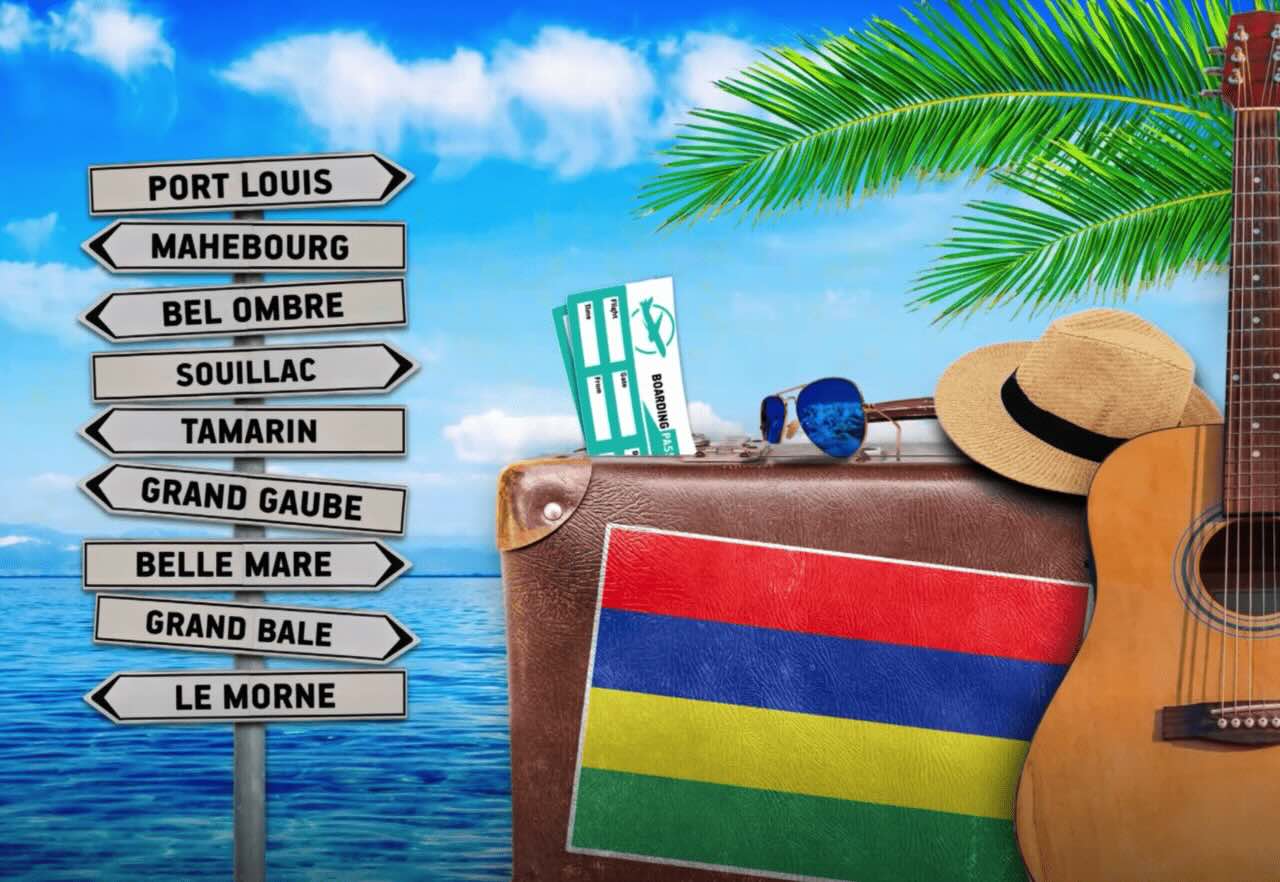
What Was Mauritius Like When Mark Twain Visited This “Paradise” in 1896?
“You gather the idea that Mauritius was made first and then heaven; and that heaven was copied after Mauritius.”
When Mark Twain wrote these words in 1897, he gave Mauritius one of the most powerful endorsements ever recorded. But what exactly did he see when he stepped onto the island in 1896? And why did this sharp, often cynical observer of the world choose such extraordinary language?
To understand the weight of that statement, we need to understand both the man and the place he encountered.
Who Was Mark Twain, and Why Does His Opinion Matter?
Mark Twain, born Samuel Langhorne Clemens in 1835, was not just a writer. He was one of the most respected observers of human behavior in modern history. Known for works like Adventures of Huckleberry Finn, he combined humor with deep social criticism. He distrusted authority, questioned popular beliefs, and rarely handed out praise without reason.
By the 1890s, Twain had faced financial difficulties and personal setbacks. To rebuild his finances, he embarked on a global lecture tour between 1895 and 1896. This journey would later become the book Following the Equator, where his famous Mauritius quote appears.
This context matters. Twain was not traveling as a carefree tourist. He was a seasoned, skeptical thinker, observing the world carefully. When he praised Mauritius, he did so with credibility.
The Voyage That Brought Him to Mauritius
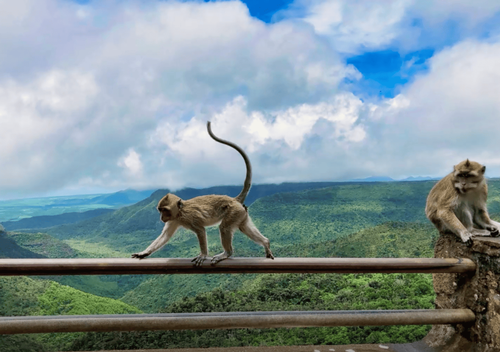
Twain's visit to Mauritius took place in 1896 during his around the world lecture tour. His route included India, Australia, New Zealand, and South Africa. Mauritius was a stop along the way, positioned on key shipping routes across the Indian Ocean.
He did not travel there specifically as a destination. Mauritius was part of a larger journey, yet it made a lasting impression. Notably, Twain never returned. This was his only visit, which makes his praise even more striking.
Mauritius in 1896, A Complex Colonial Society
At the time of Twain's visit, Mauritius was a British colony with a population estimated between 350,000 and 380,000 people. It was already one of the most diverse societies in the world, shaped by migration, labor, and empire.
The majority of the population, roughly two thirds, were Indo Mauritians. They were descendants of indentured laborers brought from India after the abolition of slavery in 1835. Many worked on sugar plantations, forming the backbone of the economy.
Creoles, descendants of enslaved Africans and mixed heritage communities, made up around a quarter of the population. A small but powerful Franco Mauritian elite controlled much of the land and the sugar estates. Chinese merchants were beginning to establish themselves in trade, while British administrators governed the colony.
This was not a simple paradise. It was a layered society with clear economic and social divisions.
A Multilingual and Multicultural Island
Languages reflected this diversity. French dominated business and culture. English was the official language of administration. Creole was widely spoken among the population. Indian languages such as Bhojpuri, Tamil, and Hindi were common in daily life.
Religious life was equally varied. Hinduism, Christianity, and Islam coexisted, creating a cultural environment that was both complex and surprisingly harmonious.
Twain, who had traveled extensively, would have immediately recognized how unusual this blend was.

An Economy Built on Sugar and Global Trade
The Mauritian economy in 1896 revolved almost entirely around sugar. More than 90 percent of exports came from sugar production. Large estates dominated the landscape, and labor intensive agriculture defined daily life for much of the population.
Yet Mauritius was more than a plantation economy. Its location made it a strategic hub in global trade. The opening of the Suez Canal in 1869 had increased its importance as a stopping point between Europe, Africa, and Asia. The port of Port Louis was busy with ships refueling, resupplying, and moving goods across continents.
This gave Mauritius a global relevance far beyond its size.
Beauty and Reality, Side by Side
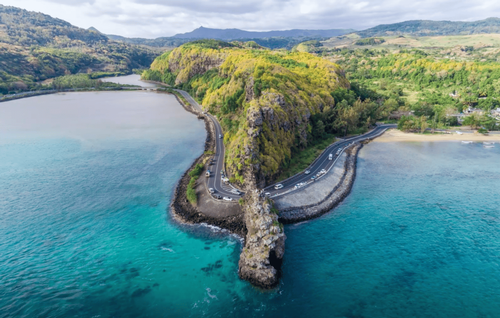
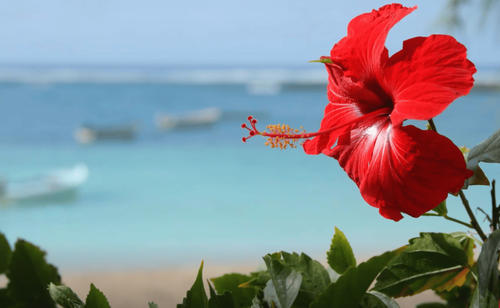
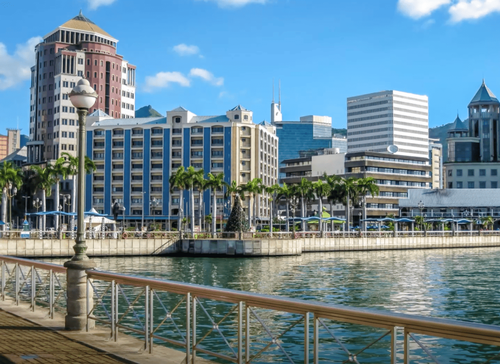
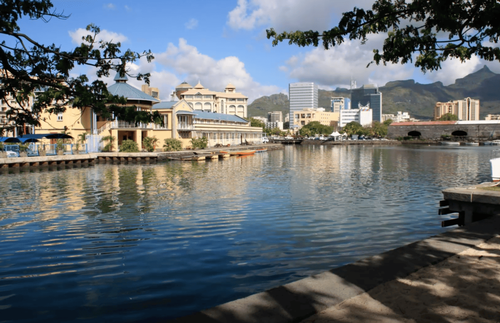
Visitors in the late 19th century often described Mauritius as visually stunning. Volcanic mountains rose sharply from the landscape. Coral reefs protected clear lagoons. The island was green, fertile, and alive with natural contrast.
But alongside this beauty were real challenges. Cyclones could damage crops and homes. Tropical diseases such as malaria affected parts of the population. Urban areas like Port Louis could be crowded and unsanitary.
Twain would have seen both sides. He was not a man who ignored reality. Yet he still chose to describe the island in terms of heaven.
Why Twain's Words Still Carry Weight
It is easy to dismiss travel praise as exaggeration. But Twain's words are different because of who he was. He was known for cutting through illusion, not creating it. His writing often exposed flaws in society, not idealized them.
So when he suggested that heaven might have been modeled after Mauritius, it was not marketing language. It was an honest reaction from a deeply experienced observer.
He saw a place where natural beauty, cultural diversity, and geographic importance came together in a rare way. Even within a system marked by inequality and colonial rule, something about Mauritius stood out as exceptional.
What Should We Take From This Today?
More than a century later, Twain's quote continues to shape how people think about Mauritius. It invites us to look beyond surface level descriptions and consider what makes a place truly remarkable.
It also raises a deeper question. If a man who had seen the world, who understood its flaws and complexities, could still be moved to describe a place in such terms, what does that say about the enduring value of natural beauty and human diversity?
Mauritius in 1896 was not perfect. It was unequal, colonial, and economically dependent on a single industry. Yet it was also vibrant, connected, and visually extraordinary.
Bottom Line
When Mark Twain visited Mauritius in 1896, he encountered more than a tropical island. He saw a complex society at the crossroads of empire, trade, and culture, set within a landscape of rare beauty. That combination left such a strong impression that he described it as the blueprint for heaven.
The power of his quote lies in this contrast. He understood the realities beneath the surface, yet still found something extraordinary. That is why his words have endured, and why Mauritius continues to capture the imagination of those who seek something beyond the ordinary.
Scott Oliver is a retired British writer and independent researcher living in Mauritius. A former Royal Marines Commando and former Wall Street investment professional, he has spent more than four decades living and working internationally across 14 countries. During that time, he worked extensively in international wealth management, cross-border asset protection, international business structuring and global residency planning.
Today, Scott's focus is no longer on managing money or providing professional advice. Instead, through MauritiusWealth.mu, he writes independent educational articles designed to help successful African business owners ask better questions, make better decisions and, when appropriate, identify the right expertise to help protect everything they have spent a lifetime building.
His articles are published solely for general educational and informational purposes and should not be regarded as legal, financial, tax, immigration, investment or other professional advice. Every business owner's circumstances are unique, and readers requiring professional assistance should always consult an appropriately qualified and licensed professional.
Trusted Expert Resources
- Following the Equator by Mark Twain, Original travel account including Mauritius observations, Read the full text at Project Gutenberg
- Mark Twain's Geography, Mauritius 1896 Chapter, Historical context and annotations of Twain's visit, Read the annotated chapter
- History of Mauritius, British Colonial Period, Overview of society, economy, and demographics, Read at Encyclopaedia Britannica
- Indentured Labour in Mauritius, Background on Indo Mauritian population formation, Read at UNESCO
- The Economic History of Mauritius, Analysis of sugar economy and trade role, Read the IMF working paper