
Why Serious Africa–China Deals Are Quietly Moving Through Mauritius
If you only look at headlines, you miss where deals are actually structured. Across Africa–China trade and investment, a growing number of serious transactions are not happening directly between countries. They are being quietly organised through jurisdictions designed to make those flows more efficient, more flexible, and more secure.

Deals Do Not Happen Country to Country
At a surface level, it appears that Africa trades with China directly. Governments sign agreements. Companies announce projects. Headlines describe bilateral relationships.
But when you examine how serious deals are actually structured, a different picture emerges.
Transactions are routed through holding companies. Investments are channelled through financial centres. Legal frameworks are chosen deliberately. Banking relationships are layered across jurisdictions.
The visible deal is only the outer layer. The structure sits beneath it.
And that structure determines how efficiently the deal performs over time.
Why Structure Matters More Than Ever
Africa–China business is becoming more complex.
Projects involve multiple parties, different currencies, and financing arrangements that span jurisdictions. Revenue, debt, and supplier payments do not always sit in the same place. Regulatory expectations vary. Banking access differs across markets.
In this environment, the question is no longer simply whether a deal can be done. The question is how it should be structured so that it remains efficient after it is signed.
Small structural decisions at the beginning of a transaction can determine whether it runs smoothly or accumulates friction over time.
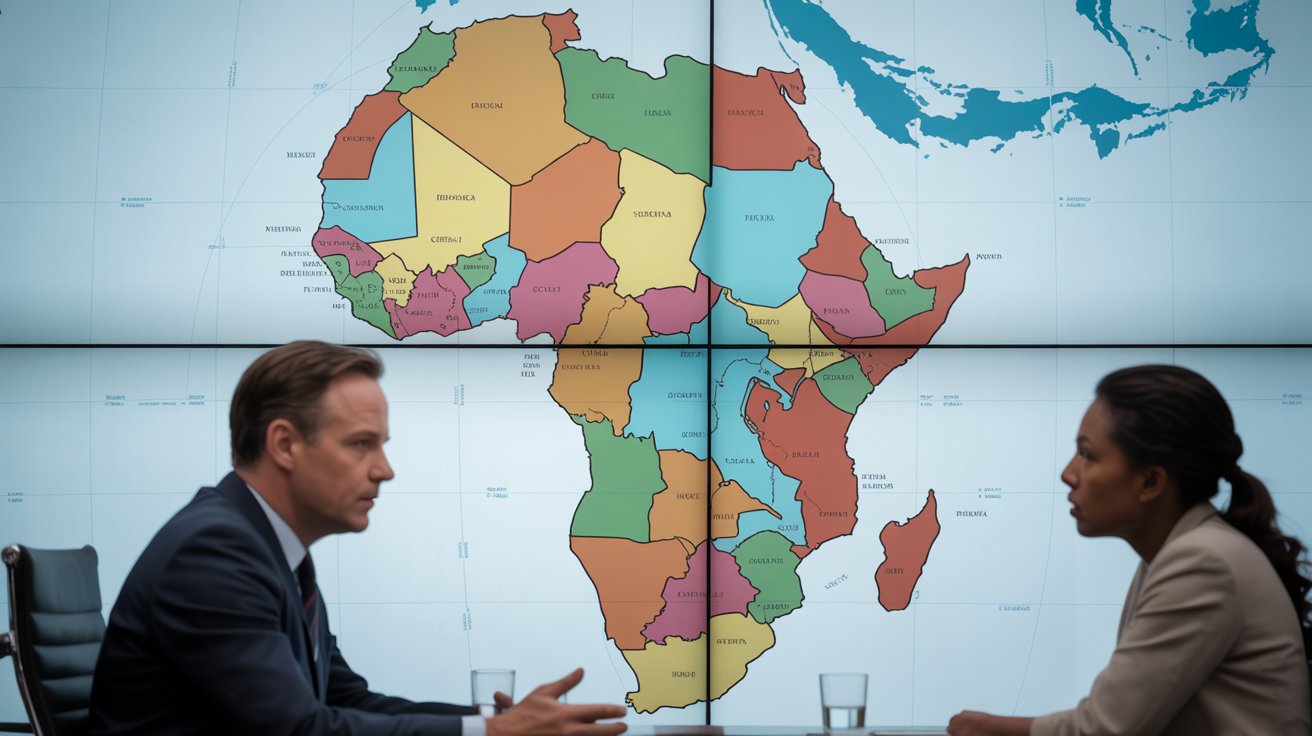
The Quiet Role of Financial Centres
Serious international capital rarely moves directly from one country to another without an intermediate layer.
That layer is typically a financial centre that provides legal clarity, banking access, and a stable environment for managing cross-border flows.
Historically, many Africa-related investments were structured through jurisdictions such as London, Dubai, or offshore centres in Europe and the Caribbean.
That is beginning to evolve.
As Africa–Asia trade deepens, there is a growing need for a jurisdiction that sits closer to both regions, understands both systems, and can operate across multiple currencies without friction.
Free Chapter
The SMART Mauritius Strategy
Discover how African business leaders use smarter structures to raise capital, protect wealth and expand internationally.
Download NowWhy Mauritius Fits This Role
Mauritius has been quietly building this position for years.
It offers a combination that is difficult to replicate. A respected legal framework based on internationally recognised principles. A well-regulated financial services sector. Strong treaty networks across Africa. A stable political and economic environment. And increasing connectivity to Asia, including the ability to support transactions linked to the Chinese yuan.
For investors, corporates, and advisors structuring Africa–China deals, these factors matter. They reduce uncertainty. They simplify banking relationships. They create a neutral platform where different parts of a transaction can be aligned.
This is not about replacing other financial centres. It is about choosing the most efficient point of coordination for a specific type of transaction.

A Neutral Platform in a Multi-Currency Environment
One of the defining characteristics of Africa–China business today is that it often involves more than one currency.
Revenue may be linked to dollars. Suppliers may require payment in yuan. Financing may come from different sources. Local costs may sit in domestic currencies.
Managing these flows directly across multiple jurisdictions can become inefficient.
A jurisdiction that can accommodate multi-currency structures within a single, credible framework becomes valuable.
Mauritius increasingly serves this function. Not as a replacement for any currency, but as a platform where they can coexist and be managed more deliberately.
Why This Is Happening Quietly
Structural decisions rarely make headlines.
They are made in boardrooms, by advisors, and by institutions focused on efficiency rather than visibility. The goal is not to announce the structure. The goal is to make the transaction work.
This is why the shift toward jurisdictions like Mauritius is often overlooked. It does not present as a dramatic change. It appears as a series of individual decisions made by serious participants who are solving practical problems.
Over time, those decisions accumulate.
What Sophisticated Players Understand
Experienced investors and operators do not focus only on the headline opportunity. They focus on how the structure supports the opportunity.
They understand that efficiency is not just about cost. It is about clarity. It is about control. It is about ensuring that revenue, financing, and obligations are aligned in a way that reduces friction over time.
They also understand that choosing the right jurisdiction is not a technical detail. It is a strategic decision that shapes the long-term performance of the deal.
The Bottom Line
Africa–China trade and investment is not only expanding. It is becoming more structured, more multi-layered, and more dependent on how transactions are organised beneath the surface.
Mauritius is increasingly part of that structure. Not loudly. Not universally. But consistently enough to matter.
The most important deals are rarely the most visible. They are the ones that are structured correctly from the beginning, allowing them to operate with less friction and greater control over time.
Scott Oliver is a retired British writer and independent researcher living in Mauritius. A former Royal Marines Commando and former Wall Street investment professional, he has spent more than four decades living and working internationally across 14 countries. During that time, he worked extensively in international wealth management, cross-border asset protection, international business structuring and global residency planning.
Today, Scott's focus is no longer on managing money or providing professional advice. Instead, through MauritiusWealth.mu, he writes independent educational articles designed to help successful African business owners ask better questions, make better decisions and, when appropriate, identify the right expertise to help protect everything they have spent a lifetime building.
His articles are published solely for general educational and informational purposes and should not be regarded as legal, financial, tax, immigration, investment or other professional advice. Every business owner's circumstances are unique, and readers requiring professional assistance should always consult an appropriately qualified and licensed professional.